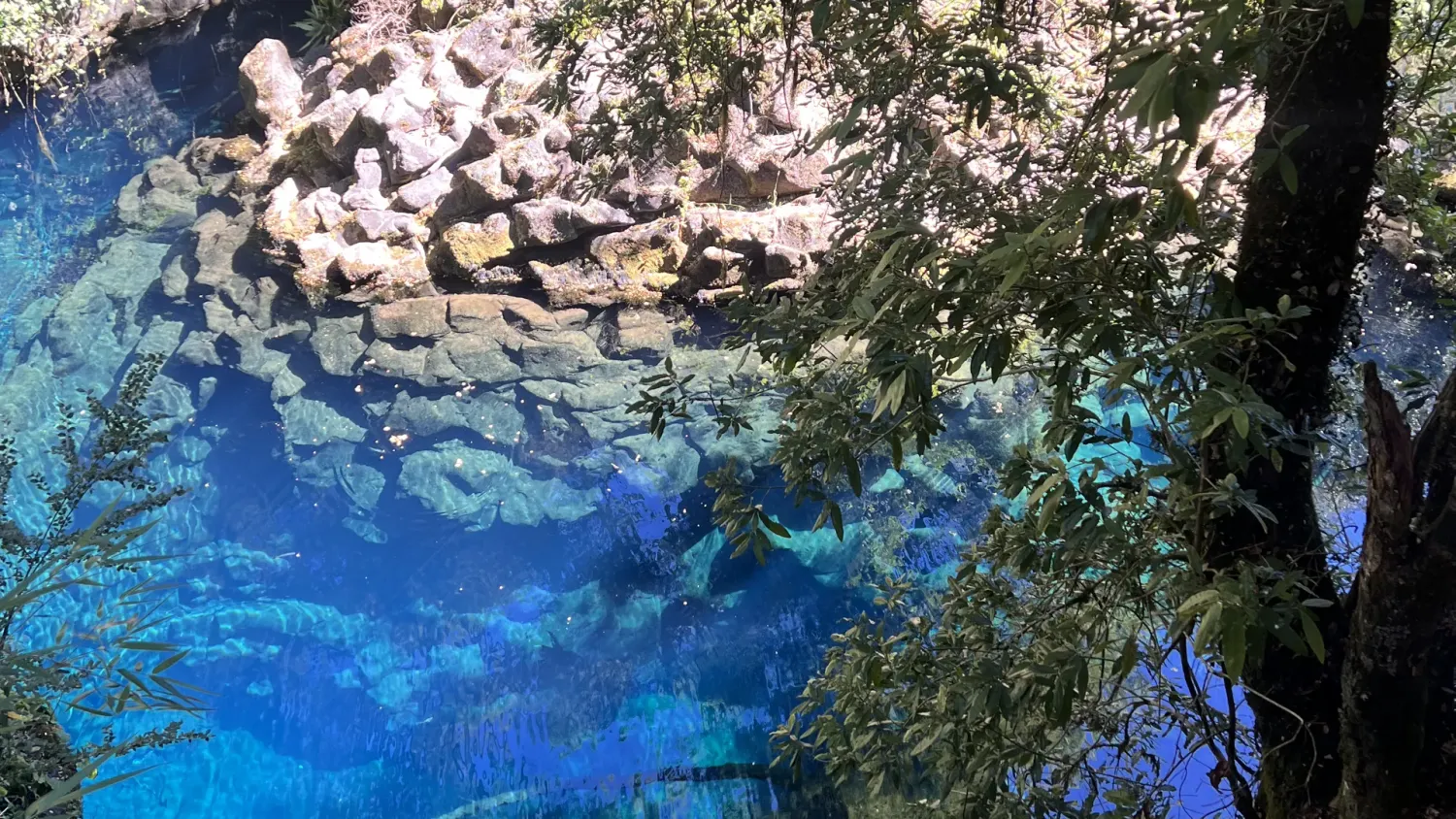
Usually, returning to Chile meant visiting family in the Valparaíso region, spending time around Valparaíso and Viña del Mar, returning to familiar people and places. This time, I wanted to travel farther into the country and closer to questions I had been carrying about my roots.
I wanted to encounter Mapuche culture through people willing to share their knowledge. To hear their stories, understand more about their relationship with the land, and learn about the place of rhythm in their lives.
I had no fixed itinerary. I knew I wanted to climb a volcano. There were forests and waterfalls I wanted to see, and a hotel with a world of duendes y hadas that had caught my imagination.
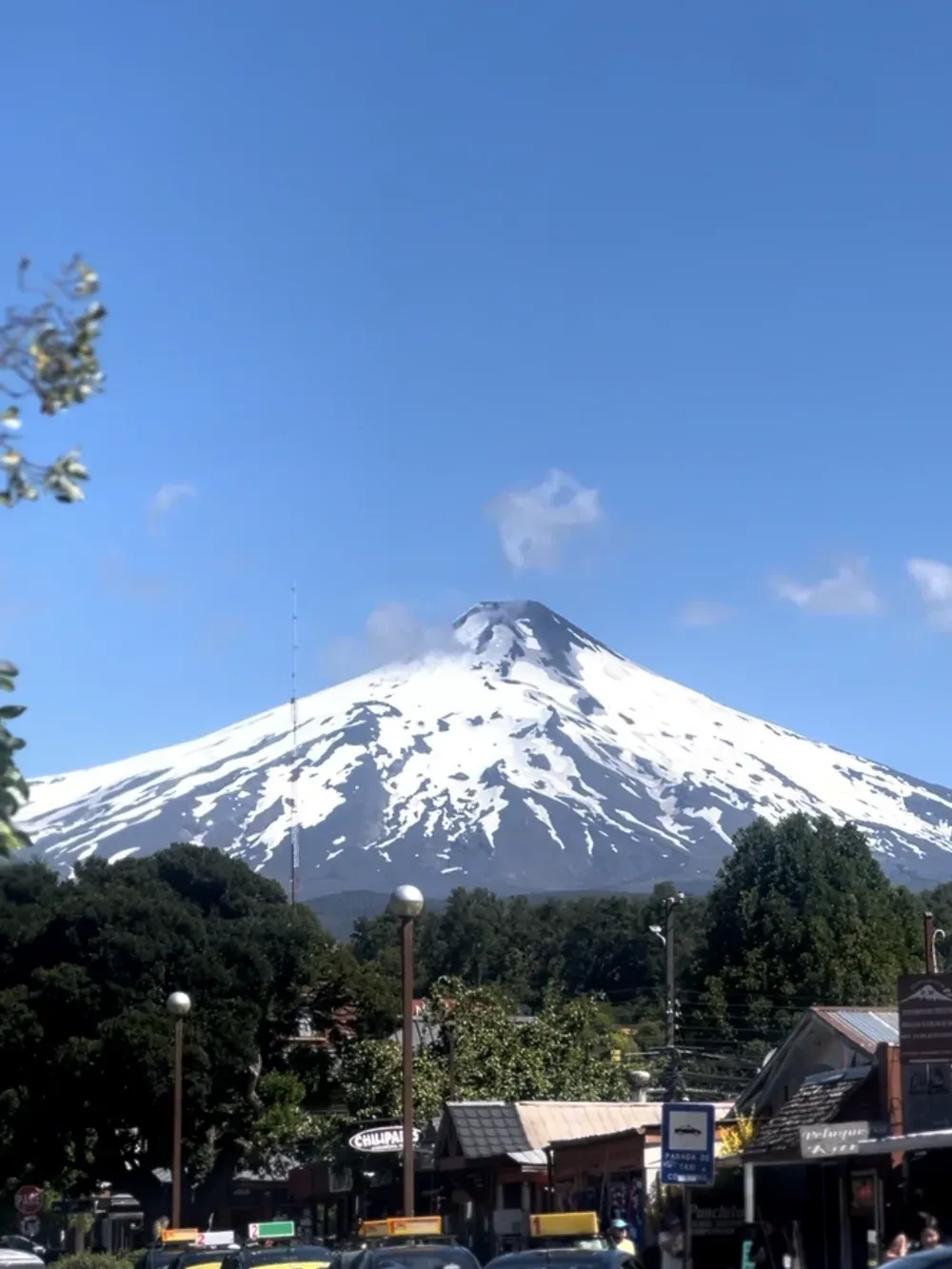
Apparently, my version of a loose plan still required a volcano.
In January 2025, a lifelong friend from Chile joined me in the south. We were both curious, ready to ask questions and follow a recommendation without knowing exactly where it would take us.
And every time I asked a question, someone gave us another place to go. Curiosity was doing most of the navigation.
A conversation on a volcano led to a recommendation. A driver pointed us toward a restaurant. Someone at the restaurant described a path into the forest. Eventually, on my last day in Pucón, a woman sat down on the sidewalk with her kultrún and began to play.
By then, I had gone looking for a small drum to bring home.
The journey had already given me much more to carry.
Years before this trip, a connection to Mapuche imagery had found a place in my work.
After Soy María, Soy Mujer, the performance that marked the beginning of my solo project, I had built a standing percussion arrangement that felt like my own playground. Acoustic and electronic instruments, movement, martial arts, video. I was developing a language inside that space, but it still needed a name.
One night, I went to sleep with that question. Around three in the morning, I woke with the name that became Mila Tina.
Later, while looking through Mapuche symbols and imagery, I encountered the heart motif that inspired my logo. Piwke means “heart” in Mapudungun.
Hearts are not usually my first choice visually. They can get a little greeting-card for my taste. But this one held my attention. Its geometry gave me another way to imagine the relationship between music and the heart.
“The geometry of love” became my way of describing that connection.
I placed the symbol on my kick drum. Every strike sent a pulse through it. The image and the sound belonged together: a heart, a beat, a physical vibration.
That association was already part of my work when I returned to Chile. The trip gave it another depth.
Climbing Villarrica became a personal test. After two years of practicing Brazilian jiu-jitsu, a knee injury had led to almost a year of physical therapy. By the time I returned to Chile, I was doing much better. I wanted to see how my knee would respond and how much trust I had regained in my body.
My friend felt ill and had to turn back, so I continued with the guides and the other climbers.
The ascent took at least five hours. We climbed as a group, taking our time, including through stretches of snow. Partway up, a climber in another group had a medical emergency. A call went out over the radios asking whether there was a doctor among the climbers.
Reaching the top felt especially meaningful after those months of rehabilitation. Near the summit, we wore masks because of the volcanic gases. I was happy to have made it, and to feel what my body was capable of again.
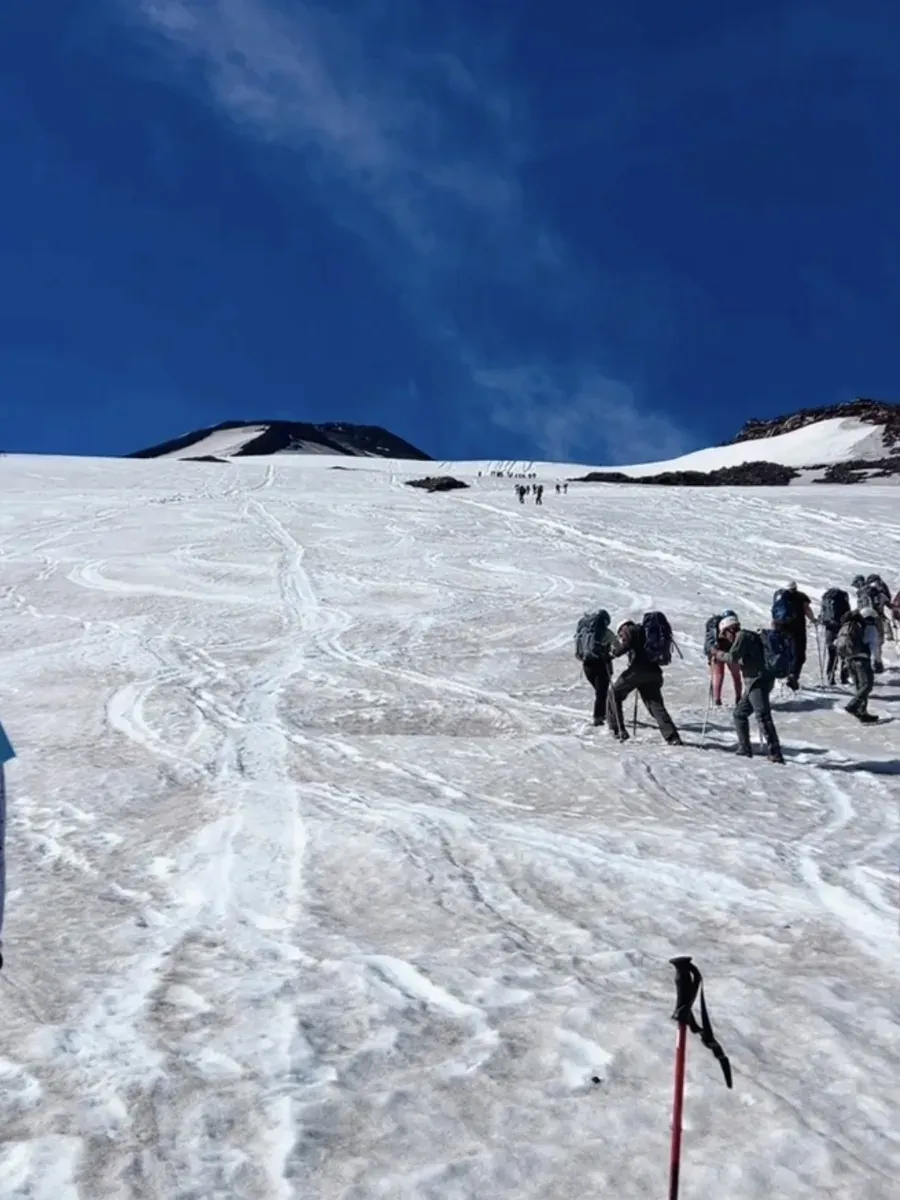
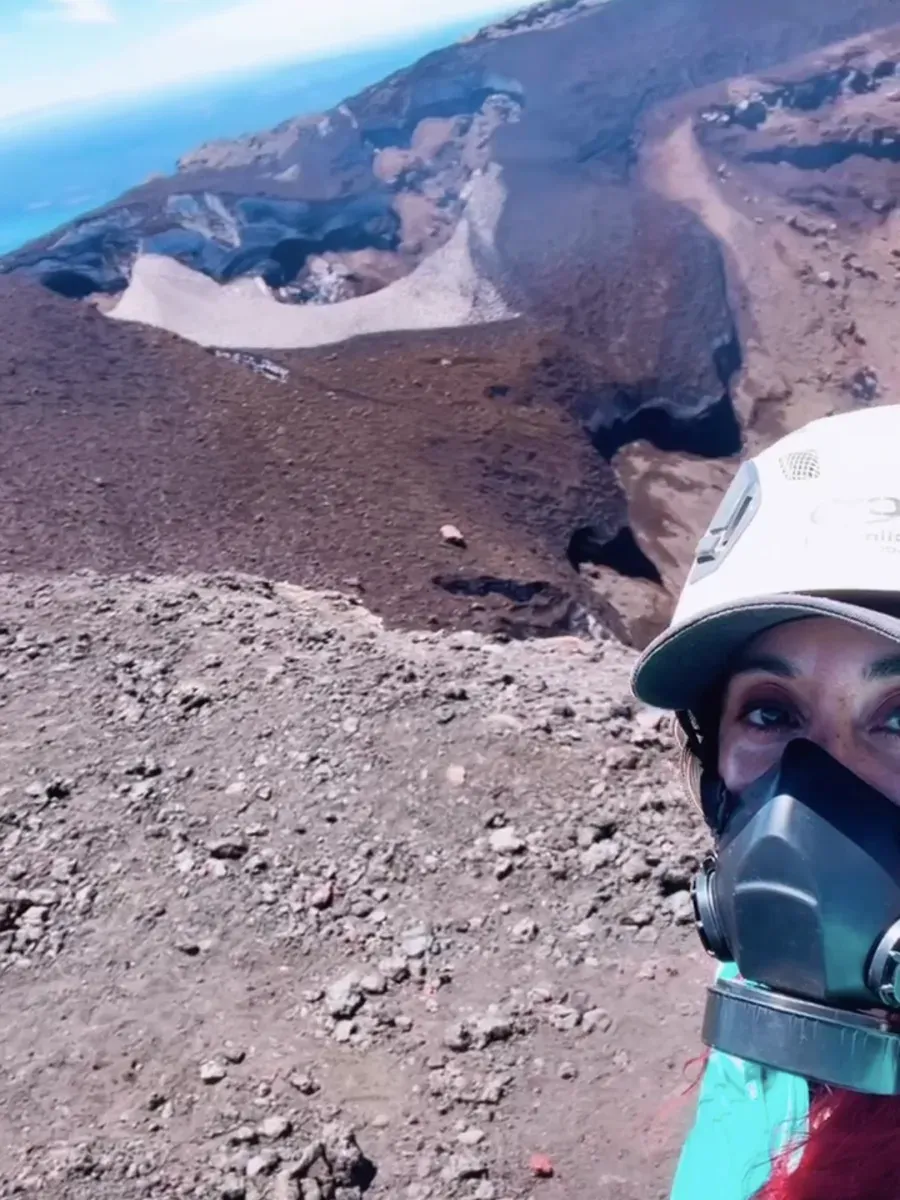
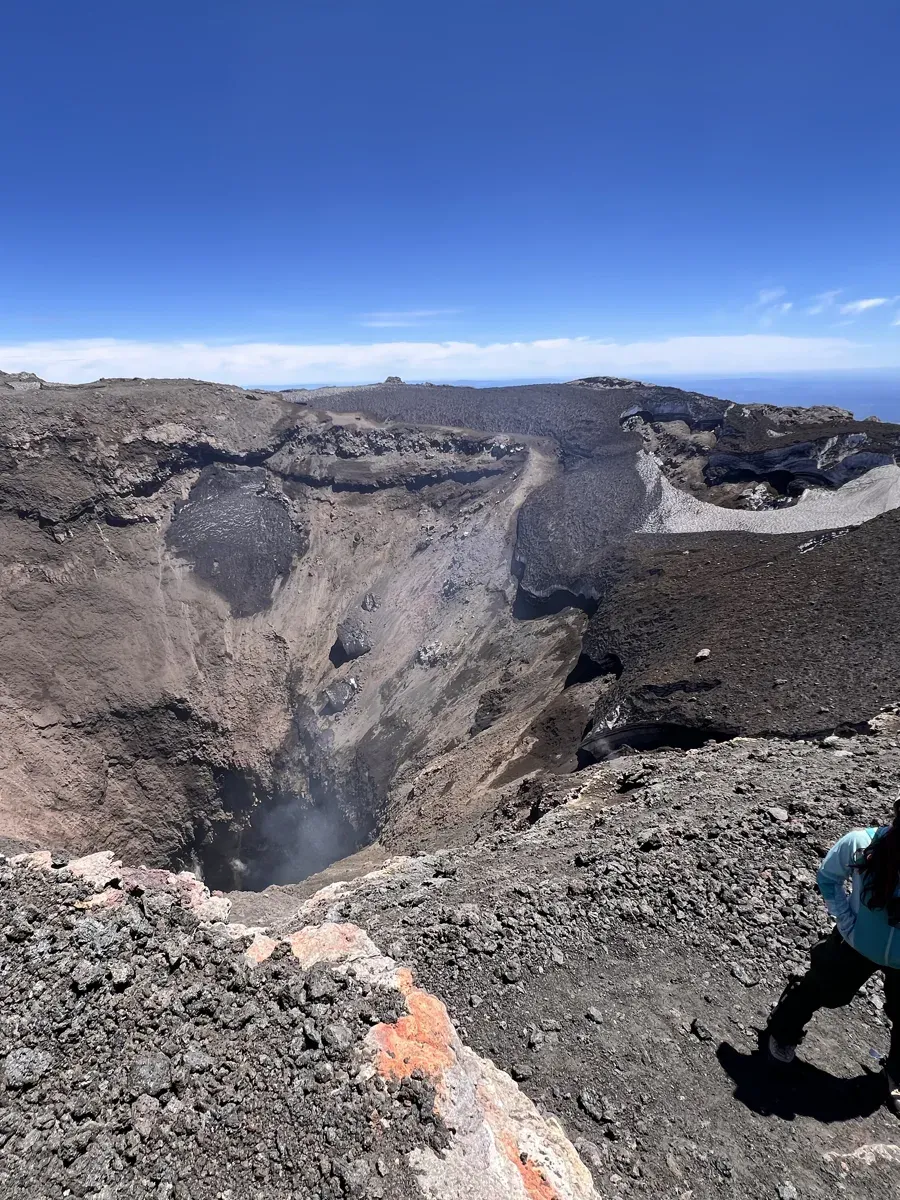
On the way up, I asked our guide about the Mapuche stories connected to the volcano.
I knew the Mapuche for their warriors and their long resistance to conquest. Generations defended their territory against Spanish expansion through warfare, alliances and negotiation. In 1641, the agreement at Quilín recognized the Biobío as the northern boundary of Mapuche territory. That endurance is part of Chile’s history that fills me with pride.
Among its remembered warriors is Janequeo, a woman associated with leading forces against the Spanish in the late sixteenth century. Her story reaches us through later chronicles and oral retellings, where history and legend meet. The image of a woman commanding warriors and defending her people has stayed alive across generations.
That history also carries wounds. The Chilean state’s nineteenth-century occupation of Araucanía brought dispossession and the loss of territorial autonomy. Admiring Mapuche resistance means acknowledging what they were resisting, including violence inflicted by the country I come from.
On the mountain, our guide took the conversation into a story of origins.
As I remember her telling, people sought refuge on the volcano during a time of upheaval. There, they encountered spiritual beings connected to the earth. These beings offered protection and wisdom, with a condition: the people would care for the forests and the land.
Then the story became more intimate. The people and the spiritual beings formed unions, and from those unions the Mapuche were born, carrying that promise into their lives.
A people whose beginning, in this telling, joined human life to the powers of the earth.
What stayed with me was the promise. In the story she told, living on the land carried a responsibility to protect it. It left me with a question of my own: what does it mean to belong to a place if belonging asks something of me?
Hearing that while climbing a volcano gave the story a particular weight. The mountain beneath our feet was also a place where an account of human origins could unfold. The landscape held memory, relationships and obligations.
And the warrior became a more complex figure in my imagination. Someone whose strength was connected to what they cared for. Someone with a forest, a family, a way of living to defend.
That connection between fierceness and care stayed with me as we continued traveling.
We took an excursion to Huilo Huilo, drawn by its forests, the Salto Huilo Huilo waterfall, and that imaginative world of duendes y hadas I had wanted to visit.
Trees, water, and places that seemed to have wandered out of a storybook. This was very much my kind of detour.
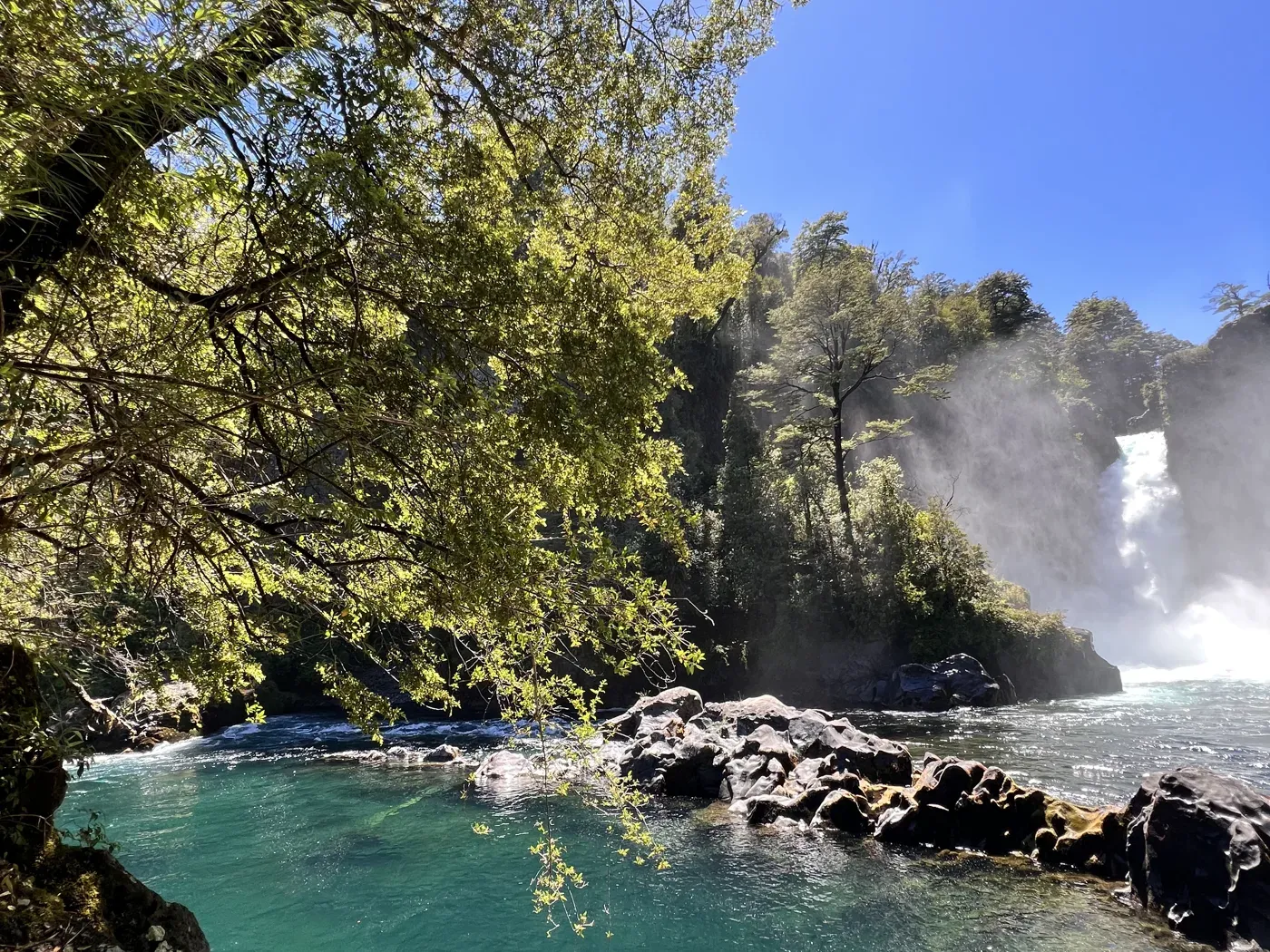
On the way, I ended up sitting beside the driver, helping translate between him and Chinese visitors who spoke English but not Spanish. Naturally, I also had questions of my own.
I asked whether he knew somewhere we could learn more about Mapuche culture. He recommended a Mapuche restaurant toward the Argentine border.
So our next destination came from a conversation on the way to a waterfall.
The recommendation led us to Cocina Mapuche de Anita Epulef, also known as Mapu Iyagl, in Curarrehue, in Chile’s Araucanía region. The town sits along the international route toward the Mamuil Malal border crossing with Argentina. Her kitchen prepares traditional Mapuche dishes with local ingredients, including produce from its own gardens.
Anita is a self-taught cook whose work with the Walüng community connects food with caring for the territory and sustaining the knowledge behind it. That connection matters to me: a recipe carries knowledge of a place, what grows there, and the people who have learned how to prepare it. If you travel through Curarrehue, her kitchen is worth making time for. The tourism listing above has contact and reservation details.
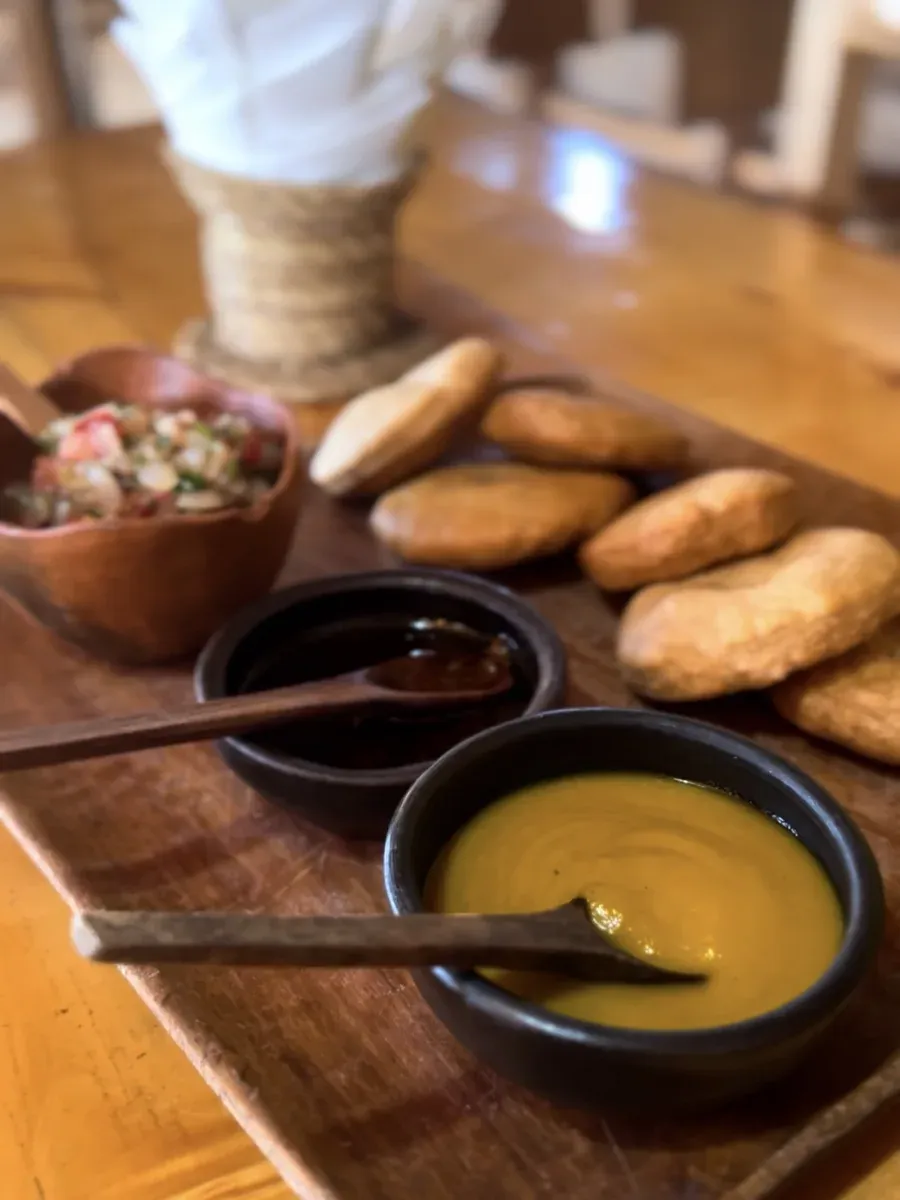
We took a bus to the restaurant. Another group was visiting when we arrived. After they left, we stayed, ordered food and spoke with Anita’s son. His mother was away, but he was willing to talk.
He seemed surprised by our curiosity. He spoke about the marginalization his community experienced and the feeling that many people had little interest in their culture.
Our conversation moved through ceremonies, dreams, family relationships and responsibilities toward the land.
He described a ceremony involving an animal sacrifice, and the care his family gives the animal beforehand, as part of a tradition carried across generations.
He also spoke about machi, spiritual and healing authorities, and the significance of dreams in recognizing a calling. Most machi are women, though men also hold the role, and their paths and practices vary. What we heard that afternoon was his account, shaped by his own knowledge and community.
For me, the conversation kept returning to sound: the kultrún, its patterns, and the relationship between a rhythm and the intention behind it.
The kultrún’s imagery also carries meaning. Its hide commonly bears a division of the world into four parts, while individual machi give their instruments particular designs. Sound and a representation of the world occupy the same object.
Before we left, I asked where we might meet more people and learn more.
He directed us to a forest feria, which I now believe was Feria Walüng in Curarrehue.
Getting there required directions of the old-fashioned variety: keep walking, look for a sign, turn, find a red house, continue down the road.
There was no useful GPS route. We had to pay attention.
And we found it.
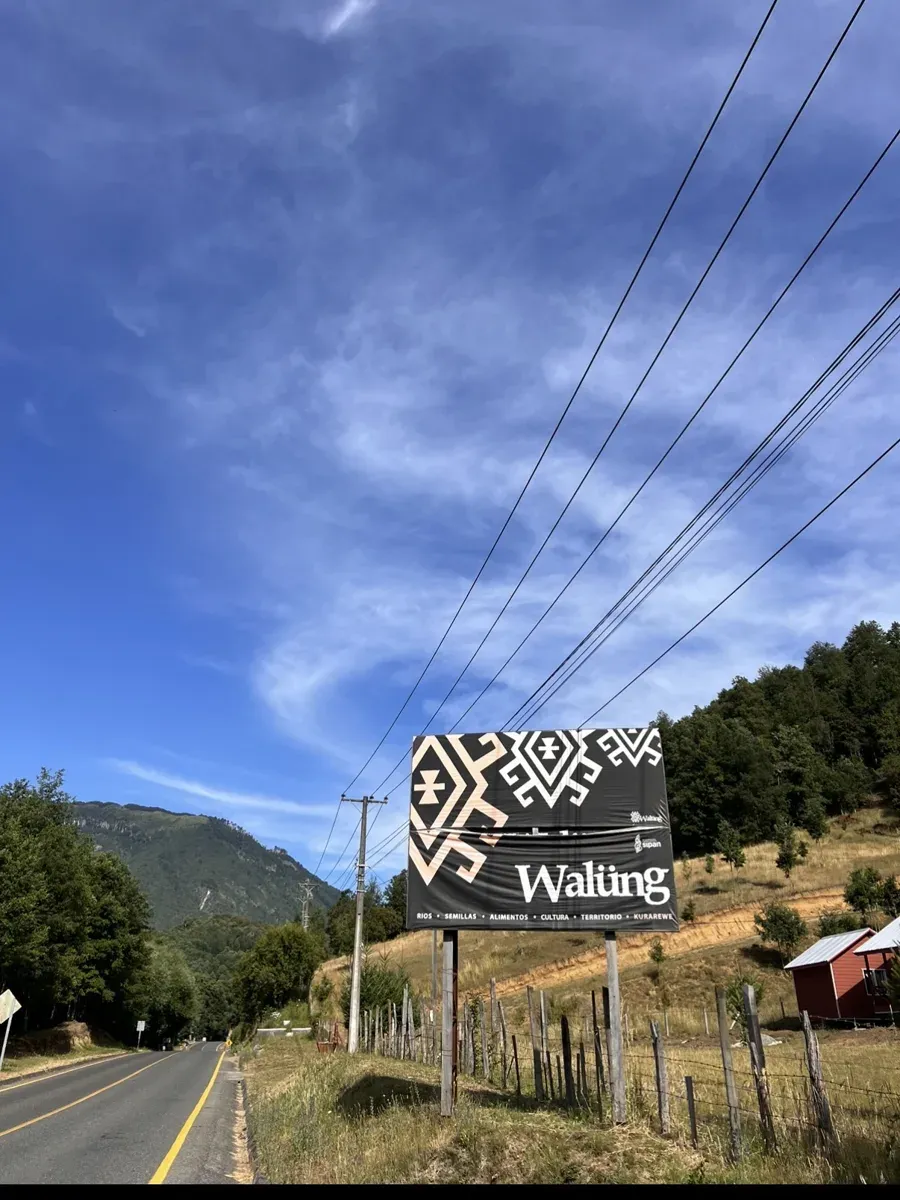
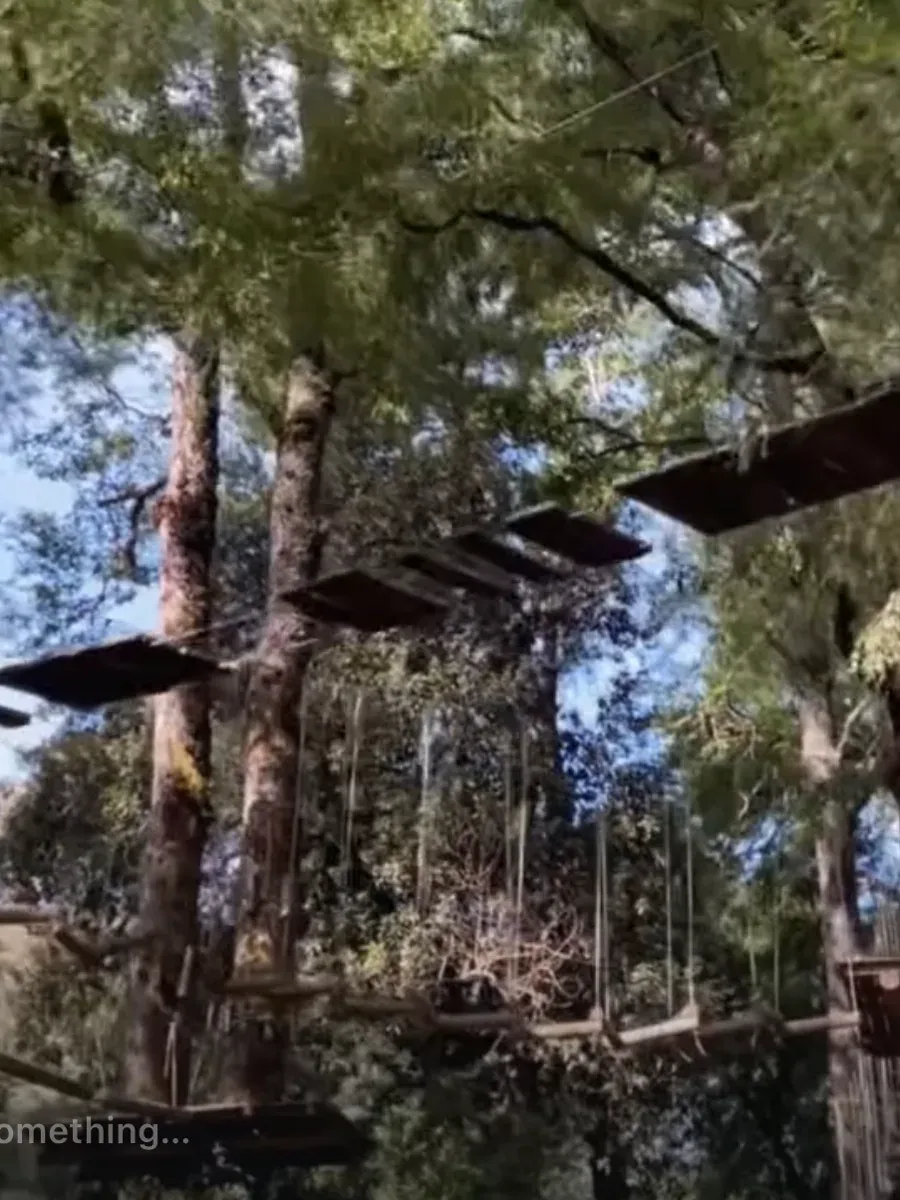
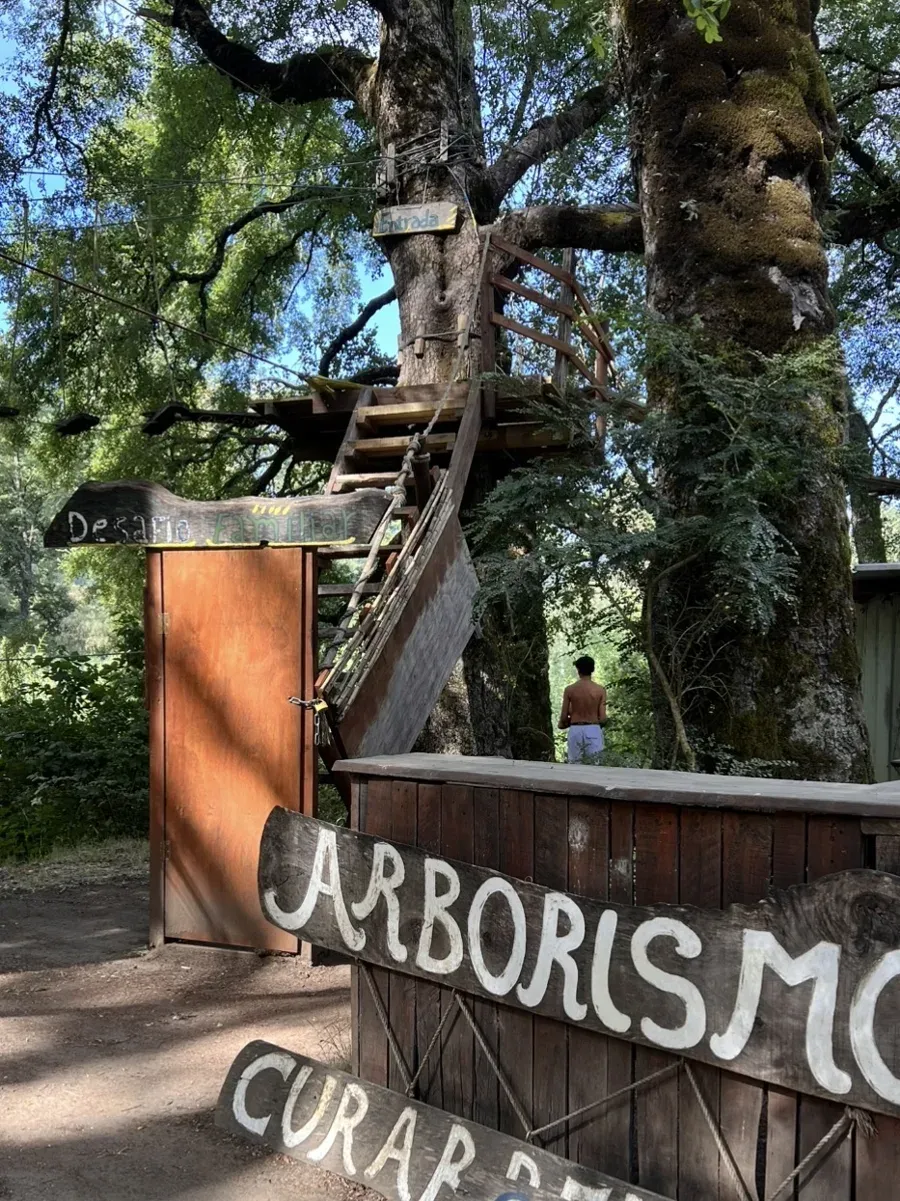
Among the trees were little stalls and structures, with wooden walkways and rope bridges overhead. People were selling jewelry, clothing, preserves, herbs and food. Children were running around. Nearby, people were bathing in the river.
At one of the stalls, a woman told me she recognized me.
She said she had dreamed I would come.
We stood looking at each other for a moment without speaking. I remember a strange feeling of recognition, although I could not explain it. Earlier, I had been listening to someone describe the significance of dreams. Now a woman was telling me I had appeared in hers.
I bought jewelry, including earrings whose sound she associated with protection from harmful spirits. There were herbal preparations and a honey-based fermented drink, too. I remember the taste more clearly than the name.
Later, my friend and I sat beside the river. Children played, people moved in and out of the water, and we stayed for a while, taking it in.
The day before we left Pucón, we visited a feria in La Península. I wanted a kultrún to bring home, and one caught my attention.
I asked about buying it.
That particular drum was not for sale. The woman at the stall directed me to someone else.
A machi.
After all those questions and conversations, there she was.
I approached feeling excited and a little intimidated. She showed me another drum, one I could buy. I picked it up and began to play.
Then she offered to show me.
She took her own kultrún, sat on a small stool on the sidewalk and began to play.
As I remember her explanation, she demonstrated three distinct rhythmic patterns: one associated with asking permission, another with connecting to the heartbeat, and another with asking for wisdom.
The exact wording has faded, but I remember the attention she gave to each pattern and how closely the playing belonged to its purpose.
People began gathering around us. They stopped to listen as she demonstrated the patterns. My friend and I stood there, absorbed.
Watching the video now still gives me chills.
I had expected to ask a price. Suddenly, I was having a lesson on the sidewalk.
I bought the kultrún. It is still here at home.
Before leaving Chile, I returned to Casablanca, the small town between Valparaíso and Santiago where I grew up. Friends there who work with yoga, Reiki and massage helped put together a spontaneous gathering for women. They invited me to play, and I brought the drum.
These were friends who had known me since I was little. Sharing that afternoon with them, so soon after the encounter in Pucón, made the return feel especially personal.
I brought a more deliberate attention to the playing. The purpose of a pattern. The way I approached the instrument. The intention I carried into a room.
That attention has stayed with me. I can learn the movements of a pattern and still have much to understand about its purpose. There is something sacred, for me, in continuing to listen, and in remembering the person who took the time to teach me.
But when I think back to Pucón, I return to the sidewalk.
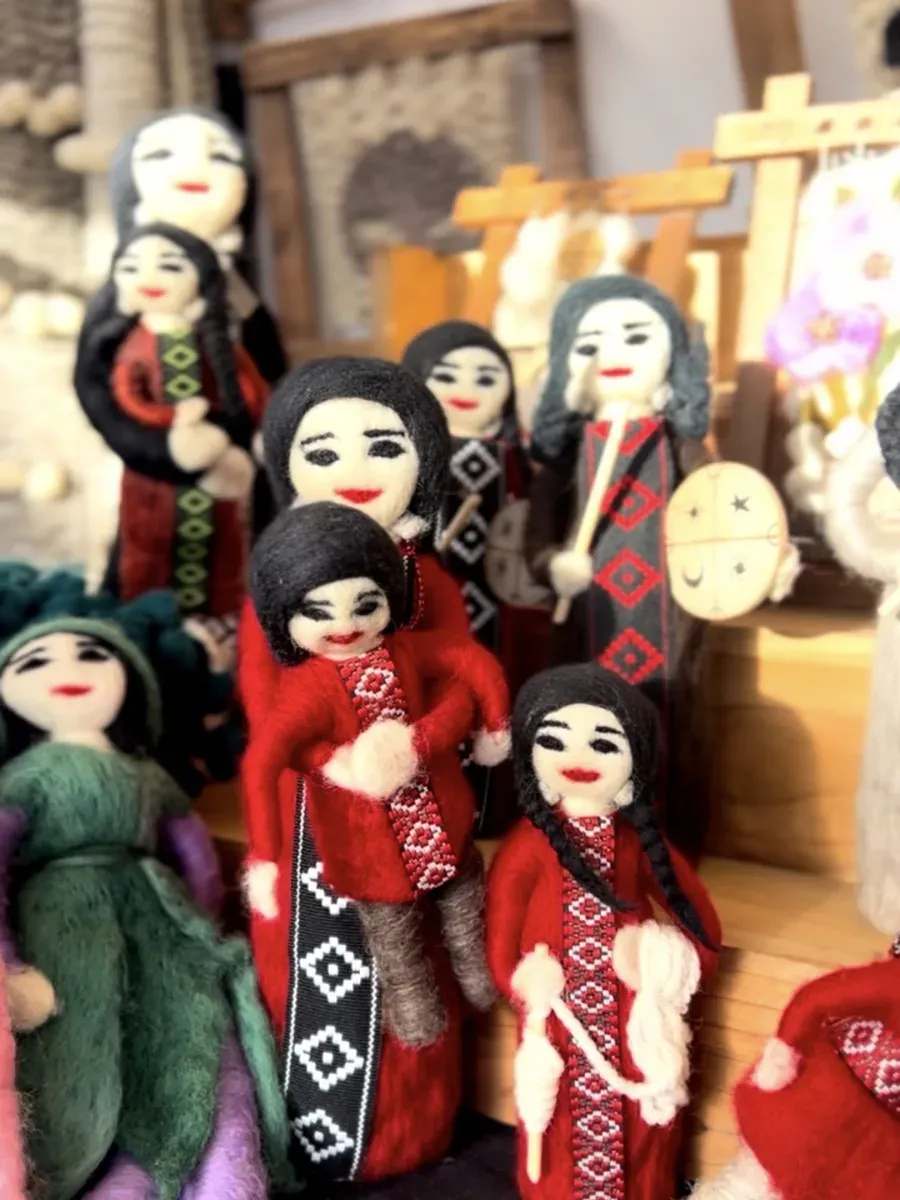
Before we parted, the machi gave me a little doll she had made: a machi with black hair, a red band bearing Mapuche motifs, and a kultrún in her hand.
A small figure holding a drum.
I think of the woman who made her, sitting there with her drum while people stopped to listen, and the time she took to show me.