Before I ever sat at a barril, I watched someone make it speak with her body.
The night before my first bomba lesson, I went to El Imán in Piñones. People from the audience stepped into the dancing: women, men, couples, different ages and bodies. The percussion was loud and physical. I kept watching the attention between the dancer and the drummer, how a movement could become a sound almost as soon as it appeared.
I didn’t yet know the vocabulary. I could see the conversation.
Puerto Rican friends had introduced me to bomba, and videos of that exchange between movement and percussion had fascinated me. Watching it happen in person, I thought: this is the ultimate test of being completely in the moment. You cannot prepare for a gesture that hasn’t happened yet.
It looked almost telepathic. The following day, I would begin learning how much study lives inside that apparent instinct.
I had come to Puerto Rico as a percussionist, an artist and a student. Through TAMBORA, I am following my curiosity about rhythm into encounters with the people who practice and transmit it, particularly women whose relationship with the drum has required persistence. My first field journal followed a journey through southern Chile. This one brought me to Río Piedras, to a lesson I had arranged by text.
I knew I wanted to study with a woman. I had no idea I had booked a lesson with the founder of the school.
Before arriving, I walked through Río Piedras, stopping to look at the graffiti and murals. Street art is something I seek out wherever I travel. Here, color spread across the surfaces of buildings, including some that stood abandoned. I wanted to keep looking.
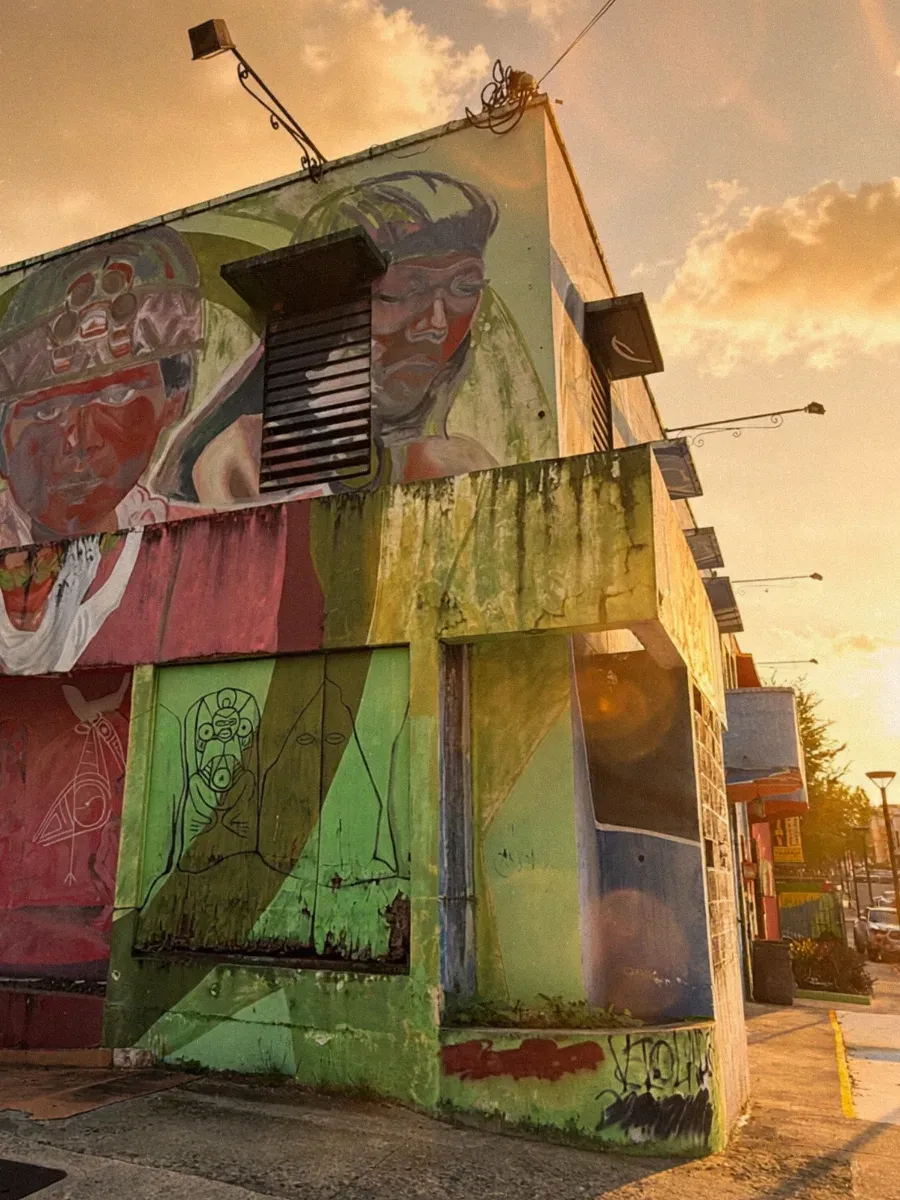
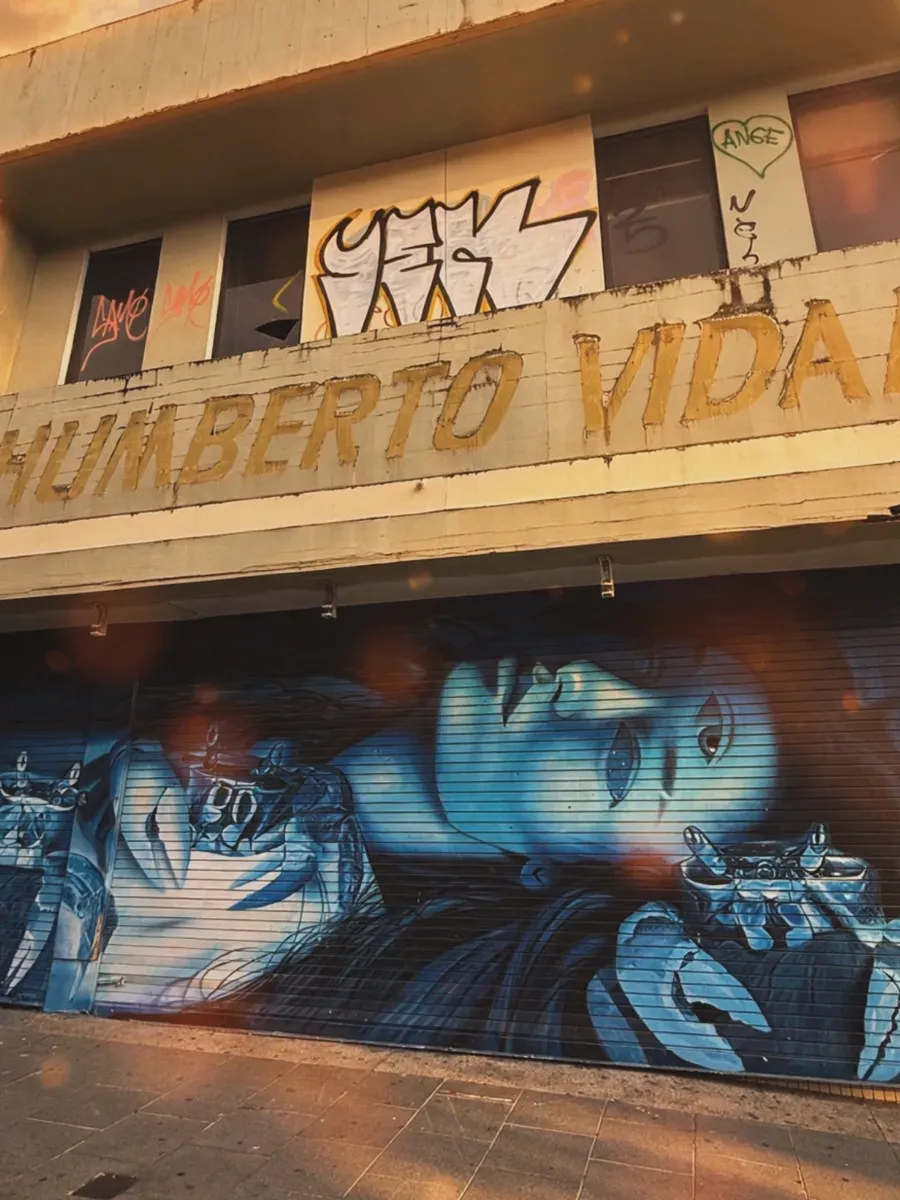
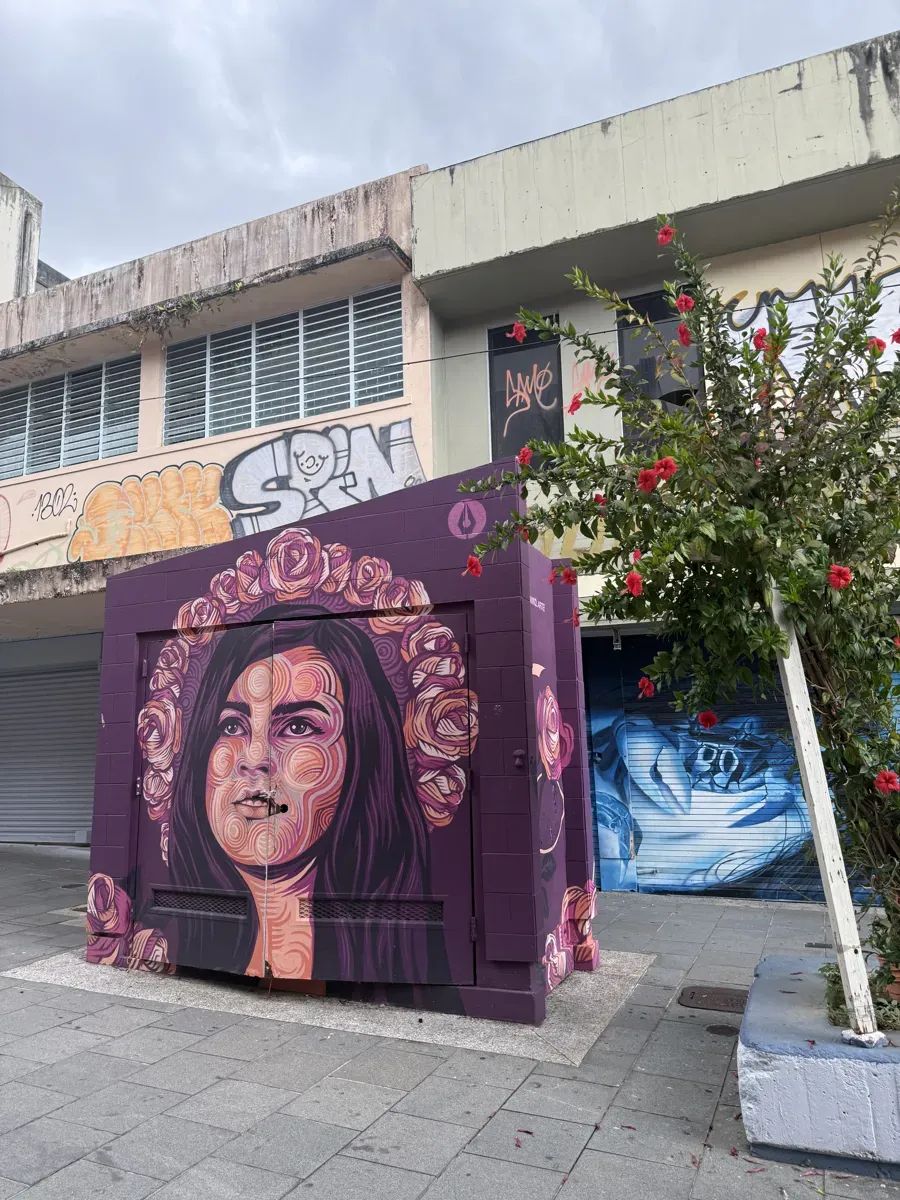
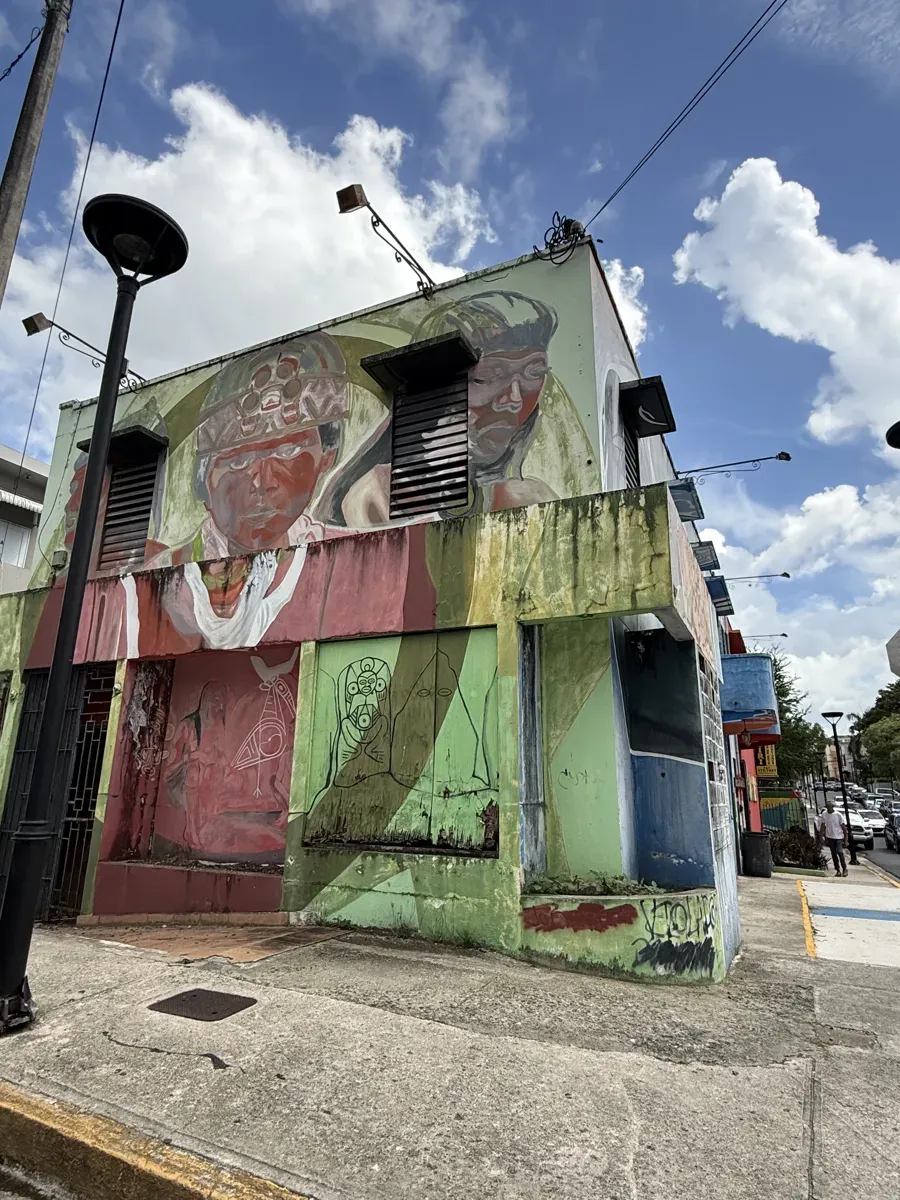
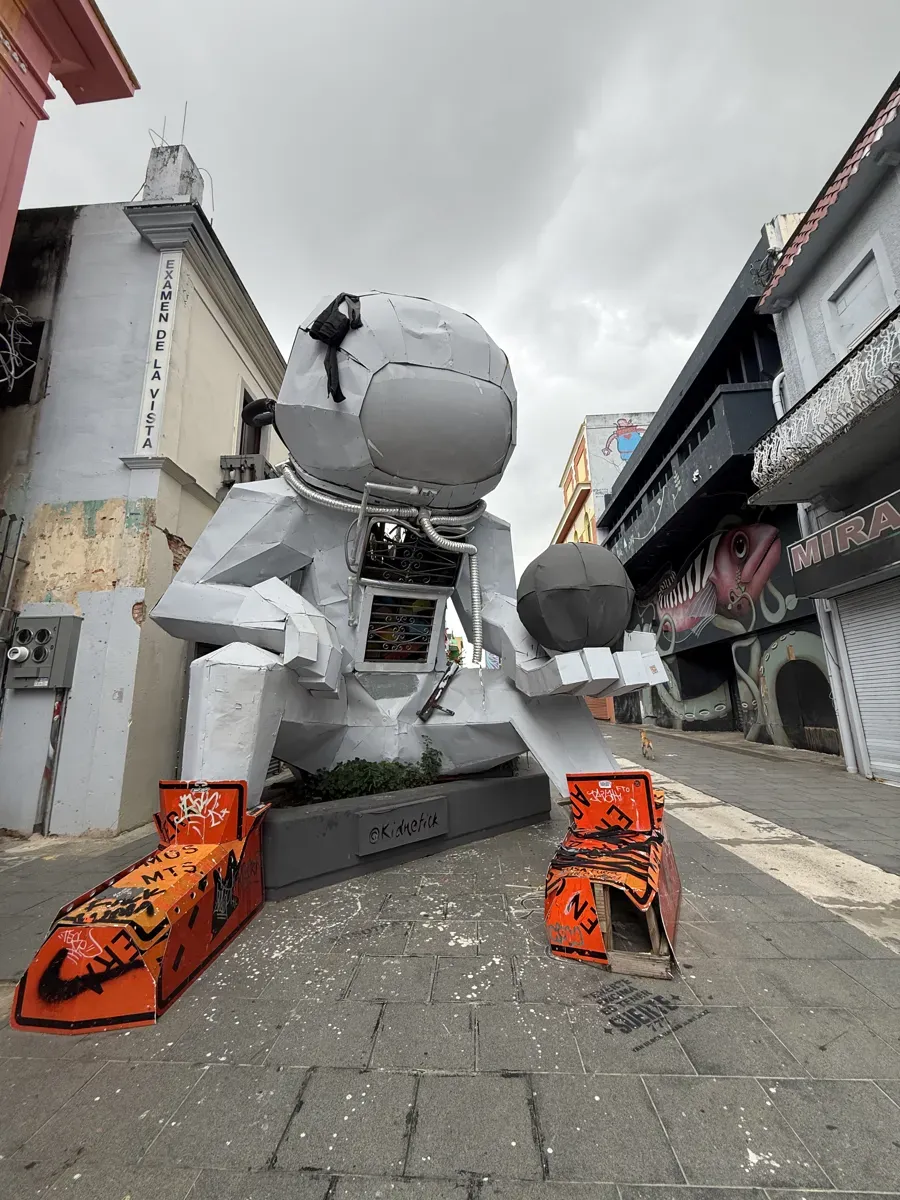
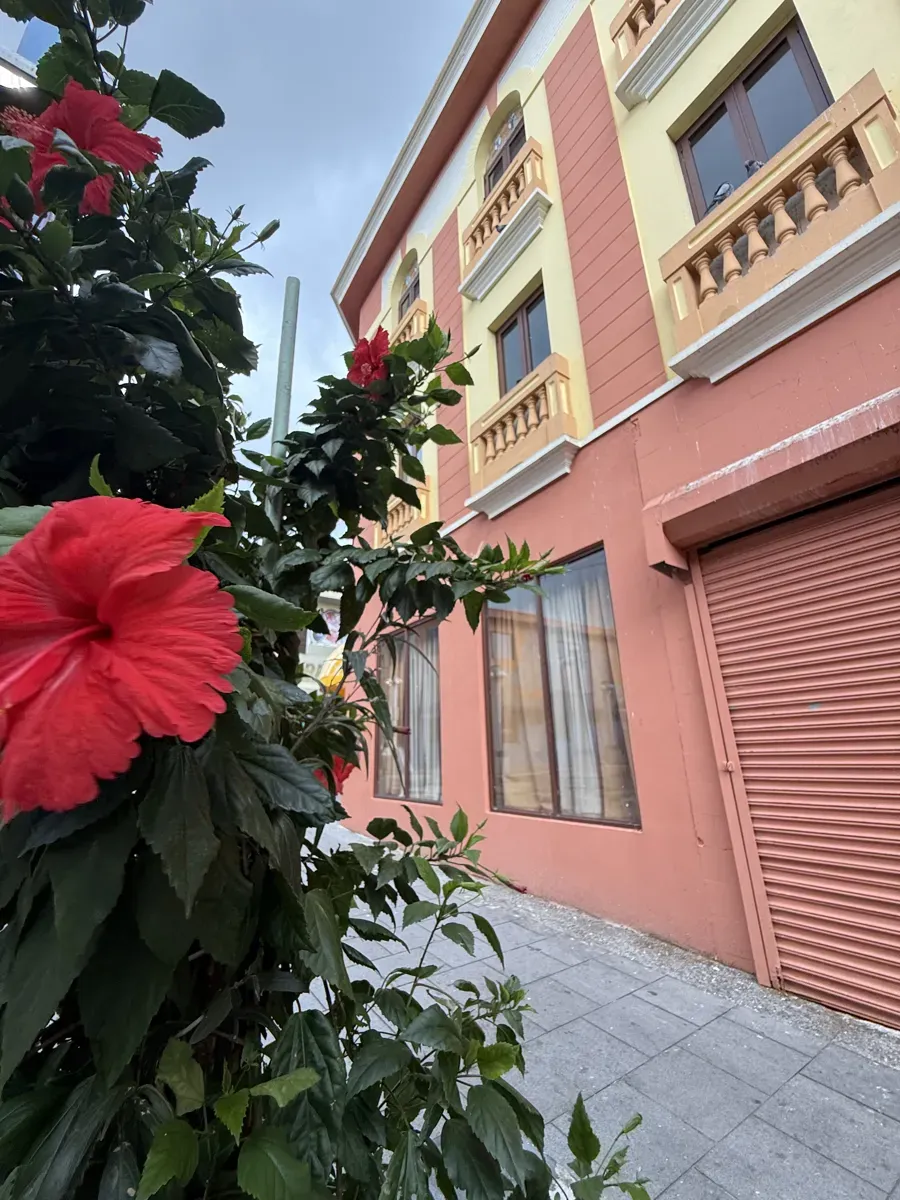
Around five, I reached Taller Tambuyé. Outside was Imac Morales, with short white hair. There was something about her presence that immediately made me want to know her story.
I introduced myself and explained that I had come for a private lesson with Marién. Upstairs, shoes had to come off. I left my boots behind and passed a large Puerto Rican flag on the way up. There were two rooms: one full of drums, another with aerial hoops and fabrics. Imac was getting the space ready as the school opened.
Rayza joined me, with Marién’s permission, and helped film our interview.
My exchange with Marién beforehand had been brief and direct. When I checked who would teach me, she explained that she was the person answering my messages and the person giving the lesson. No elaborate introduction. No résumé attached.
The biography turned out to be considerably longer than the text message.
Marién Torres López is a percussionist, dancer, singer, choreographer and cultural educator. She founded Taller Tambuyé in 2003, later founded the women’s bomba group Ausuba, and created Les Barrileras del 8M, a feminist movement bringing bomba into collective action.
She arrived a little later than planned and assured me that I would still receive the full lesson. As we began, what I noticed was her patience. She explained carefully, with humor and an evident affection for the people and traditions she was introducing.
We began with culture and history. Marién spoke about regional differences, teachers and elders, and the ways knowledge travels between people. By the time my hands reached the drum, I already had more to listen for.
I had never played a bomba pattern before. We worked with sicá and different ways of playing it, paying attention to the relationship between hand technique and sound. The lower tones felt grounding to me. I could feel how a small adjustment changed what the instrument gave back.
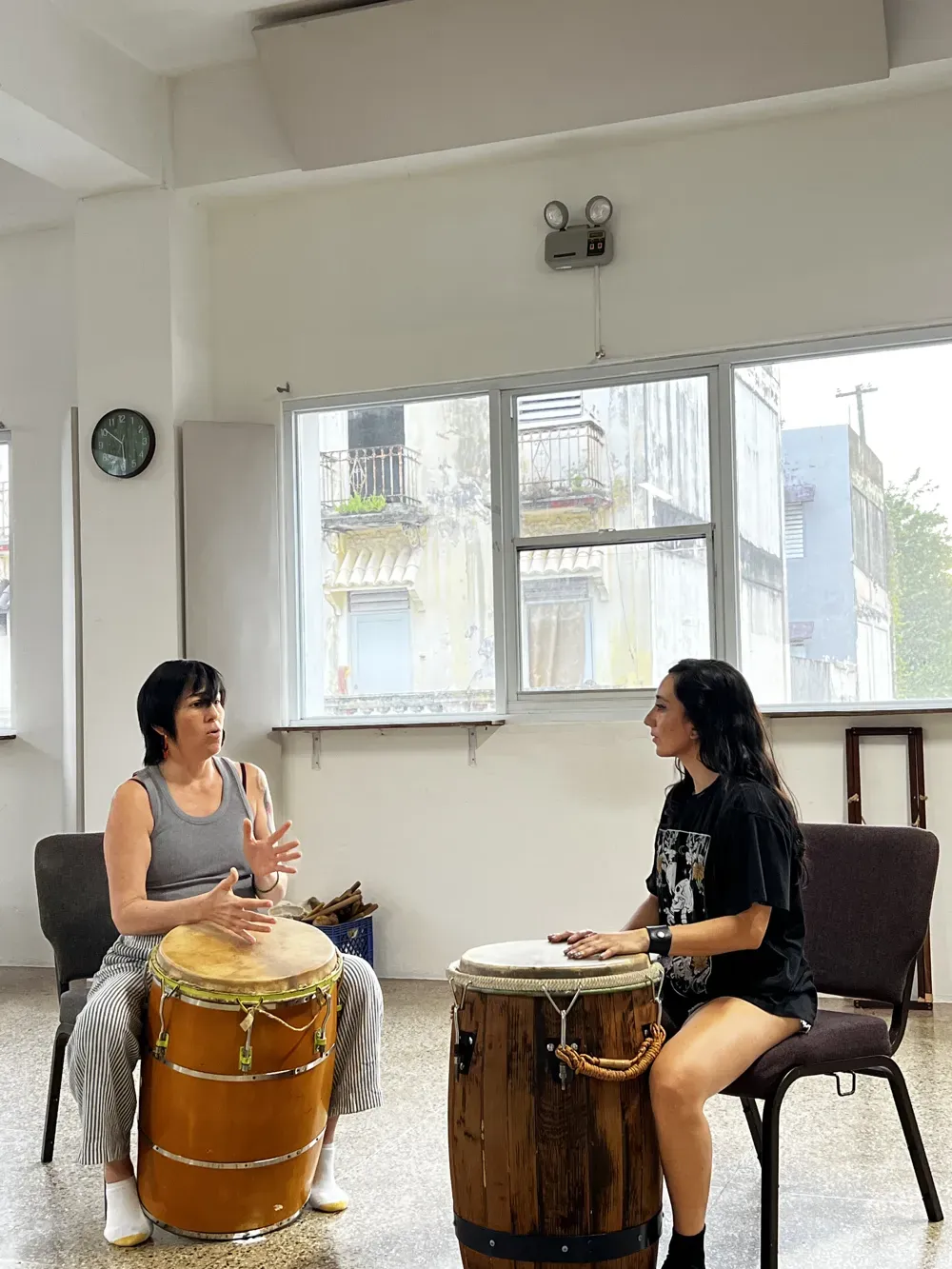
Those distinctions deserve to be learned with someone who can hear you, watch your hands and respond. Marién can do that. An article cannot correct my wrists.
I didn’t dance during the lesson, although dancing became part of the conversation. Rayza explained that she had never managed to move her shoulders that way. Marién was entirely confident she could teach her.
Apparently, the shoulders were simply awaiting further instruction.
As we talked, the scene I had watched in Piñones became clearer. Marién explained the different responsibilities within the percussion: the buleador maintains the rhythmic foundation, while the primo, also called the subidor, responds to the dancer.
The dancer greets the primo, establishing contact before beginning that exchange. From there, the drummer must attend to the movements being offered. There is a vocabulary to study, and there are differences in how that vocabulary is understood and played.
“Es un lenguaje.”
It is a language.
That sentence gave precision to what had initially seemed mysterious. The immediacy comes from years of listening, practicing and learning to recognize what another body is saying.
She also explained something I found beautiful: an experienced dancer working with a beginner drummer should adjust to what that person can play. The aim is communication. Skill includes knowing how to help that communication happen.
Then came the other half of the agreement.
“Si te sientas, aguanta.”
If you take the seat, be ready for what comes.
There was generosity in her explanation, and responsibility. Each person has to pay attention. The dancer considers the drummer’s experience; the drummer accepts the demands of the exchange. I thought about how much musical maturity is contained in that balance, and how little of it can be measured by the number of impressive things someone can do alone.
Marién described sicá as anecdotal, a rhythm whose songs can recount what is happening, preserving people and events through music. Something sung about the present can carry that present into the future.
That stayed with me. A rhythm can hold a story because people keep giving it their voices, their circumstances and their names. Learning it means encountering some of those lives.
When I asked about her experience as a woman percussionist, Marién described beginning with dance in the 1990s. In the public bomba spaces she knew then, women were far less visible behind the barriles. She acknowledged women who had played within their families and described her generation’s role in bringing women’s drumming more openly into public life.
By the time she took up the drum, she was already an experienced dancer. She knew what she wanted to hear. Her hands had to learn how to produce it.
“Yo practicaba cinco horas para que me saliera un seco bien en las dos manos.”
She would practice for five hours to get that sound right with both hands.
I loved the specificity of that. Five hours with a sound you can already imagine and hands that are still catching up. Anyone who plays an instrument knows something about that distance.
She spoke about resistance, too, including discouraging comments from people with whom she had shared bomba for years. Her response was to continue practicing.
“Para mí es mantequilla.”
The comments slid off. She had work to do.
I told her about wanting to become a drummer and being discouraged by a drummer I admired. Those words had stayed with me for a while. Eventually, I began anyway, gradually building a practice around the instruments, movement and forms of expression that felt connected to me.
Hearing Marién speak, I felt understood. There was a familiarity in the experience of wanting to play and encountering somebody else’s opinion about whether you belonged there.
“Nosotras no tenemos que hacer las cosas como los hombres.”
We do not have to do things the way men do.
I heard that as permission to develop a voice. Technique matters; so does the person learning it. There are many ways to inhabit an instrument, and the work of finding yours deserves to be taken seriously.
Her answer kept returning to other women: practicing together, sharing knowledge, creating the conditions that would allow someone else to begin.
One story made those conditions concrete. Marién recalled bringing together thirty women, from girls to older adults, with a single barril. They practiced the cuá patterns with sticks around a wooden shipping pallet.
Thirty women. One drum. A pallet.
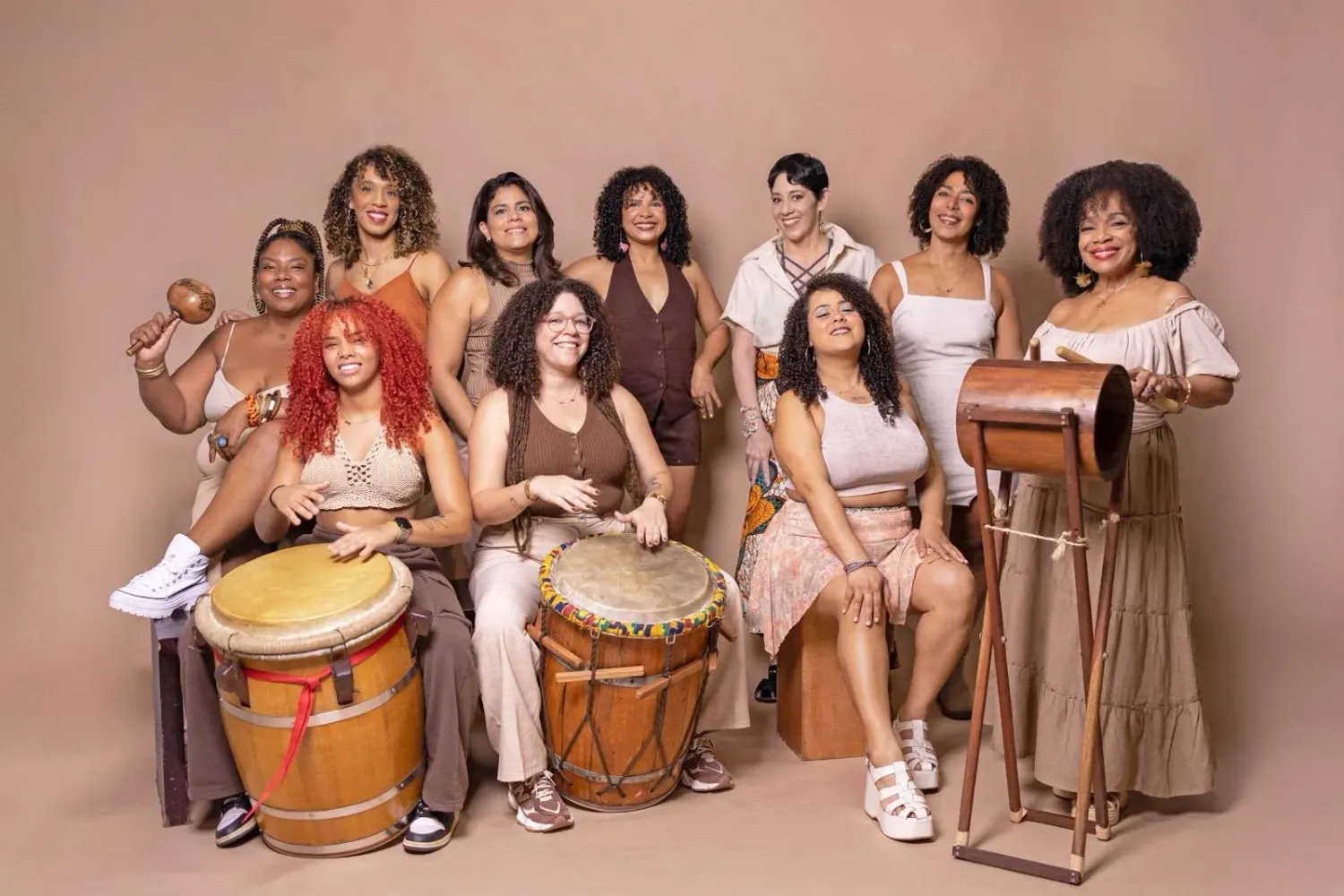
It is an image I keep returning to when I think about what it takes to sustain a place like Tambuyé. Someone gathers people, works with what is available and keeps going. Years later, a visitor like me can walk upstairs, take off her boots and sit down for a lesson because that work continued.
Marién was equally direct about the responsibility of teaching. She spoke about the limits of learning from videos when nobody is there to explain what you are seeing or help you correct it. A compelling performance can spark curiosity, as it had for me. Studying with a teacher gives that curiosity somewhere to develop.
Then she described her own evolution. She had continued learning throughout her years of teaching, and had invited former students back to study with her without charge because her understanding had grown.
I admired that. She could acknowledge the limits of what she once knew and invite people to keep learning alongside her. Her experience gave her a clearer sense of what still required attention.
After the interview, I spoke more with Imac at the desk. The conversation moved toward Chile, activism and a black dog associated with the Chilean protests. She told me about a Chilean artist friend and the connections she felt with people advocating for justice there.
I had traveled to learn about a Puerto Rican tradition, and now someone was talking to me about a symbol from my own country.
Chile’s history of dictatorship and its consequences for my family and community shape how I hear conversations about expression and freedom. Our histories are different, but I recognized the importance of being able to speak, gather and be visible.
Earlier, Marién had described bomba as a social tool, connecting its history to questions of freedom that continue in people’s lives. She spoke about students finding the confidence to express who they are.
These were stories from her community, shared by someone who had witnessed them. They helped me understand what she meant when she called bomba a philosophy of life.
When people thanked her, she said, her response was:
“No, gracias a mí no; gracias a la bomba.”
I understood why she kept bringing the conversation back to the tradition and the people around it. Her work belongs to a chain of learning, and she was actively extending it.
The night in Piñones and the afternoon at Tambuyé stayed with me in different ways. At El Imán, I had been caught by the intensity of the playing and the immediacy of the dancers’ responses. With Marién, I was listening closely to a quieter demonstration, to the depth of a tone and the choices inside a pattern.
I began wondering how much else I would hear as I encountered different players, generations and regional approaches. One lesson had made the questions more interesting.
I left energized, grateful and wanting other people to find this place.
That is part of what I want TAMBORA to do: document encounters in a way that brings attention back to the people who shared their knowledge. Their names matter. So do the schools, rehearsals, instruments and daily work that allow a tradition to continue.
For anyone whose curiosity has brought them this far, Marién’s invitation was simple:
“Les invitamos a que vengan al Taller Tambuyé, aquí en Río Piedras, en San Juan, Puerto Rico.”
Go meet her. Ask questions. Take a class.
The moment that first astonished me, a body moving and a drum answering, now carried the presence of people I had met. I could hear more of the work inside it. And I wanted to keep listening.