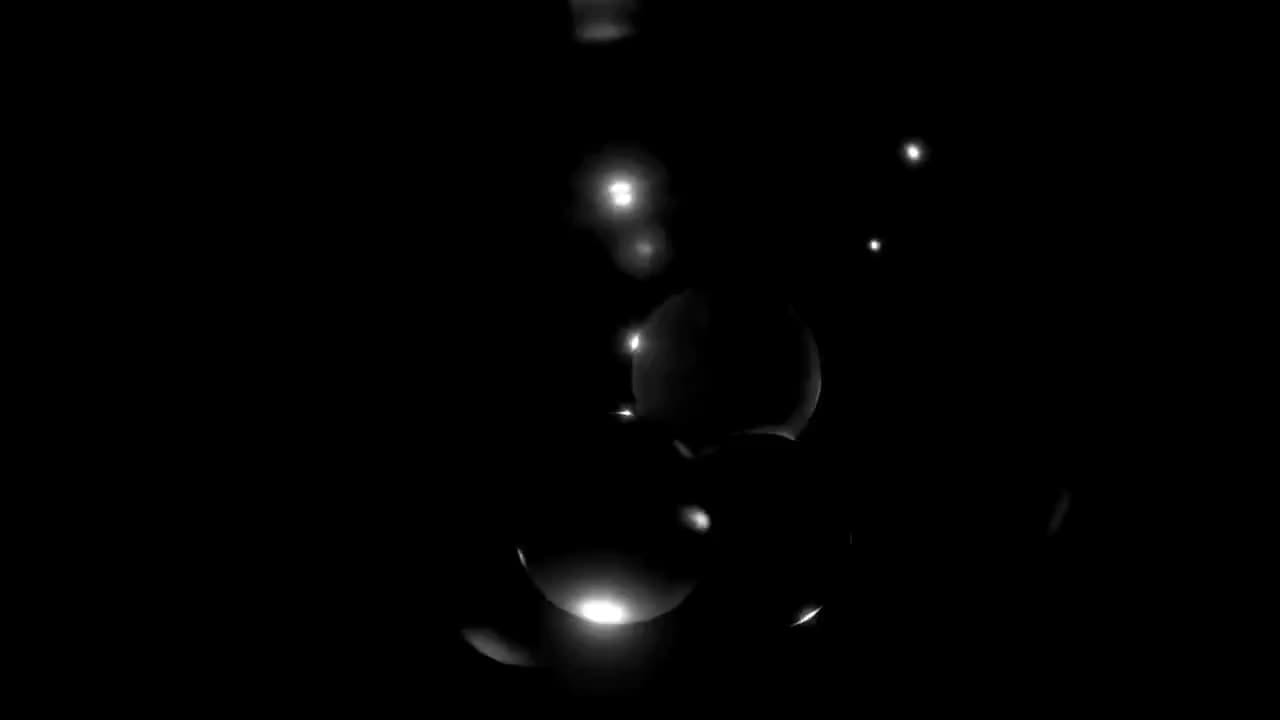
BioSymphony
The body composes.
A bio-kinetic performance system by Mila Tina that translates heart rate variability, breath, and movement into real-time generative sound and image. A working prototype, ready for its residency phase.
Download the project proposal (PDF)The body becomes the instrument
BioSymphony is an interdisciplinary research and performance project investigating how internal physiological states can function as compositional material.
The current phase, BioSymphony: The Heart, translates heart rate variability, respiration, and embodied movement into real-time generative sound and visual environments. By making normally invisible biological processes perceptible, the project creates a feedback loop between physiology, technology, environment, and human perception.
Body → Signal → Translation → Environment → Perception ↻
Can internal physiological states become an instrument?
- How does perceiving biological activity as image and sound alter embodiment, emotional awareness, and self-regulation?
- What new forms of performance emerge when the performer’s autonomic state becomes part of the composition?
- How might multiple bodies generate a shared audiovisual environment?
Already working. Ready to expand.
The system receives live biosignal data, processes it through a custom signal architecture, and maps changes in autonomic state to generative visual behavior inside TouchDesigner.
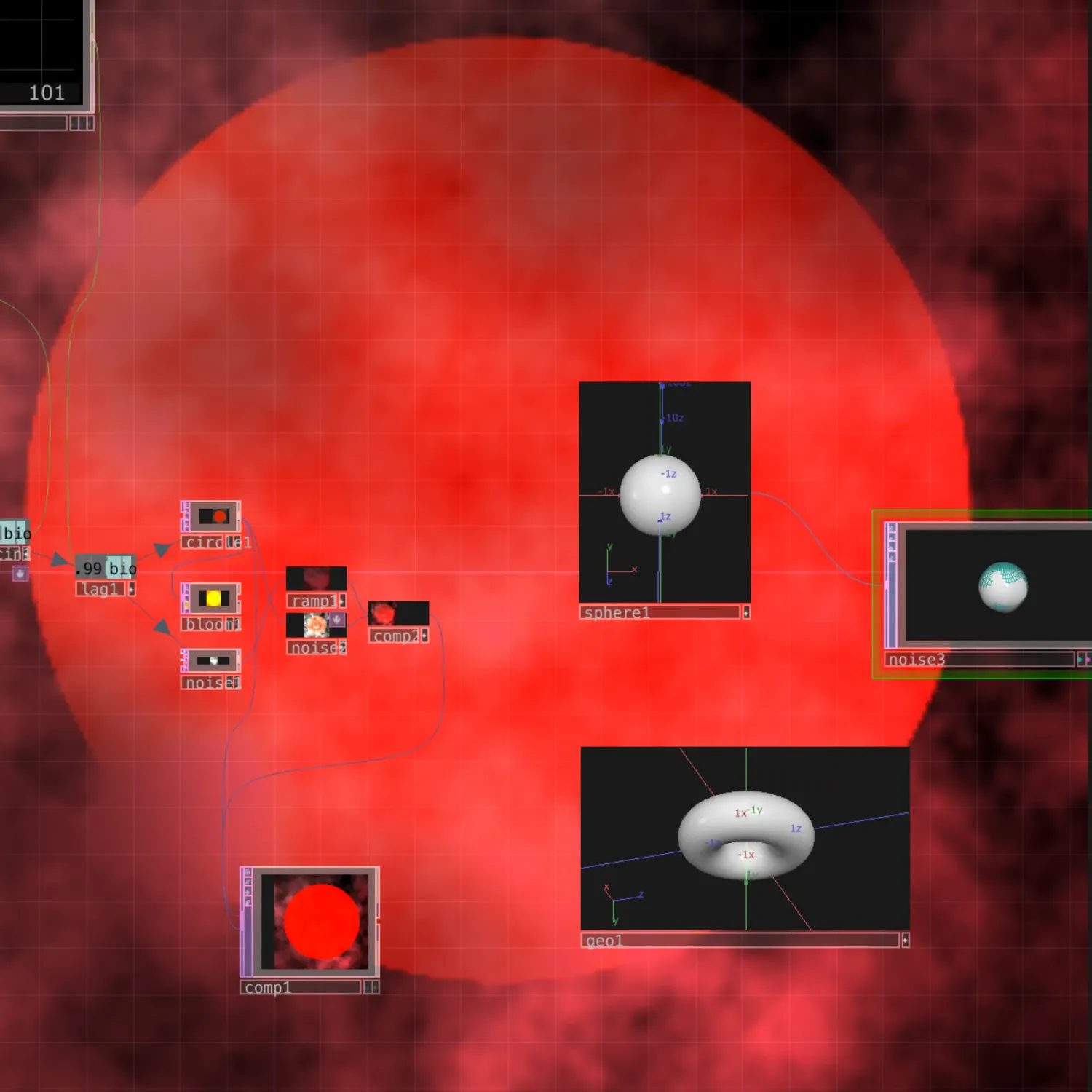
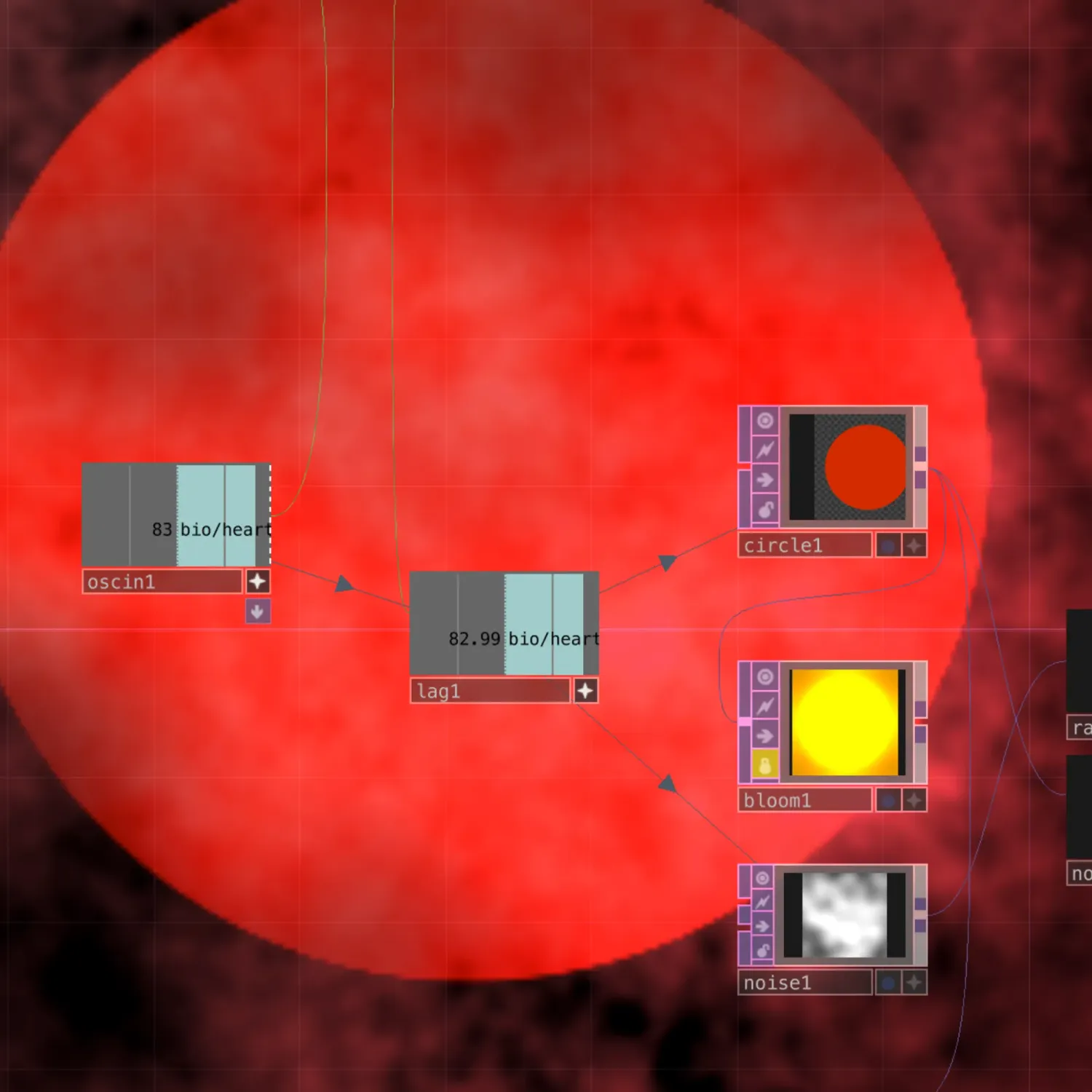
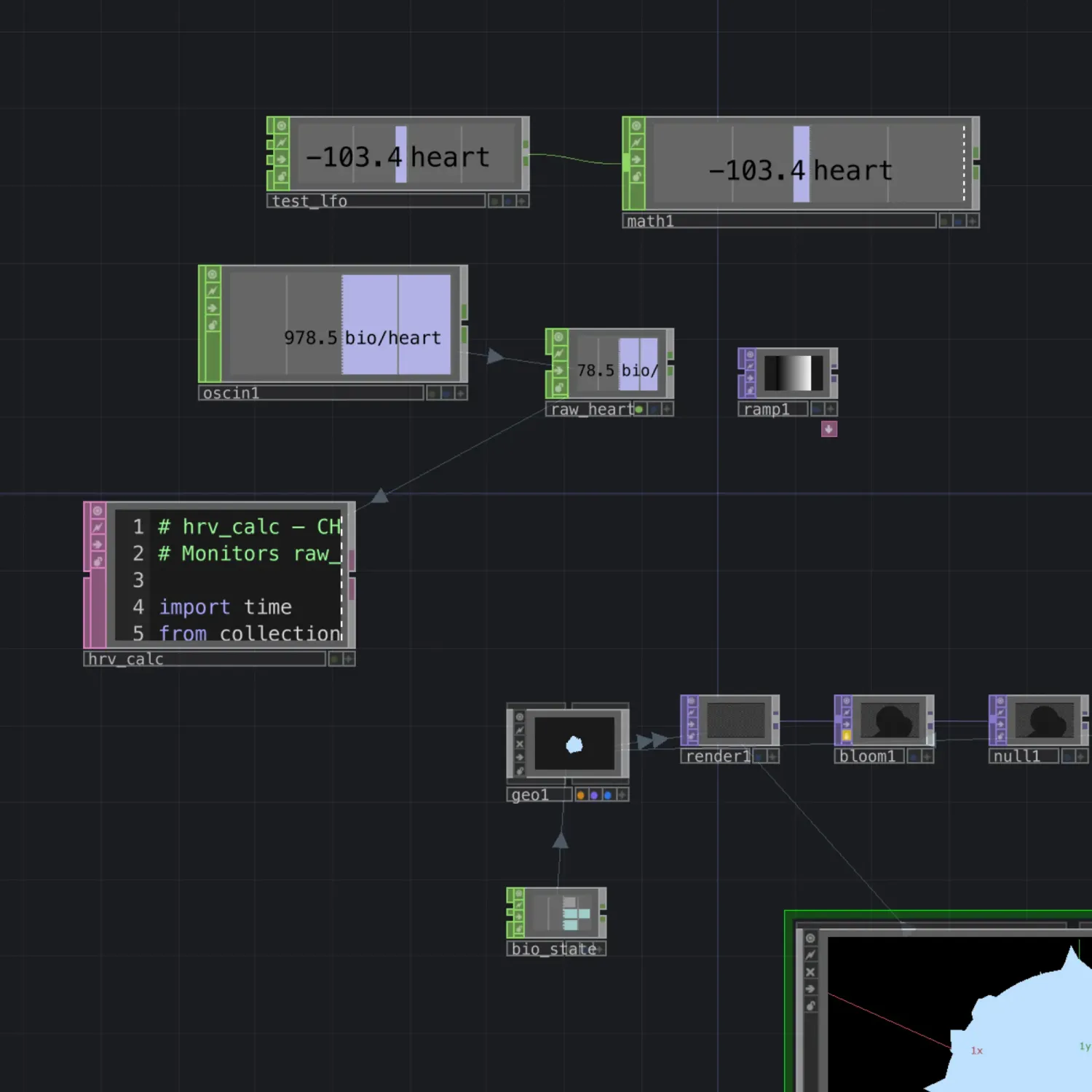
- Real-time HRV sensing
- OSC data communication
- TouchDesigner visual engine
- Custom state mapping
- Projection-ready output
Performance integration is in development.
Technical environmentTouchDesigner · Python · OSC · HeartMath Inner Balance HRV sensor · Ableton Live · signal processing · generative graphics · projection systems. Additional equipment and software can be integrated according to the residency environment.
From invisible state to perceptible environment
The system does not illustrate the body. It lets physiological dynamics influence the behavior of the environment itself.
Biosignals
- Heart rate variability
- Respiratory rhythm
- Embodied movement
- Percussive gesture
Signal processing
- Signal acquisition
- Data normalization
- State calculation
- Parameter mapping
- Real-time modulation
Environment
- Generative visuals
- Projection environments
- Sound modulation
- Spatial composition
- Interactive performance
Rhythm begins before music
As a percussionist, Mila Tina has long investigated rhythm as both a biological and cultural phenomenon. The first rhythm every human being encounters is the heartbeat.
BioSymphony extends this principle by treating physiological rhythm not as passive data, but as an active creative agent capable of shaping sound, image, performance, and collective experience. The work approaches rhythm as physiology, communication, regulation, movement, and perception.
From prototype to performance
- HRV sensor integration
- Real-time data streaming
- OSC communication pipeline
- TouchDesigner visual engine
- State-mapping architecture
- Initial generative visual tests
BioSymphony: The Heart
Phase I, active. HRV, breath, movement, percussion, and real-time generative environments.
- Expanded visual behaviors
- Stronger HRV-to-visual mappings
- Breath integration
- Percussion and movement integration
- Live performance format
- Audience interaction protocols
- Spatial sound exploration
Collective Resonance · The Mind
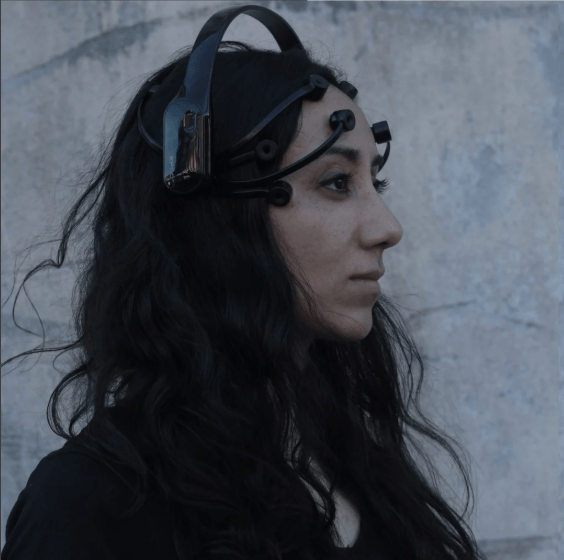
Phase II, planned: multi-person physiological interaction and shared audiovisual environments. Phase III, future research: EEG integration and the translation of neural activity into generative systems.
- Multi-person biofeedback
- Collective physiological environments
- EEG integration
- Neural signal translation
- Research collaborations
- Advanced data sonification
The system exists. The next phase needs time, space, and exchange.
BioSymphony needs dedicated studio time, technical experimentation, interdisciplinary dialogue, and participant testing to expand the prototype into a fully realized immersive performance system. The residency is not sought to begin the project. It is sought to turn a functioning prototype into a public artistic experience.
Technical development
Refine HRV acquisition and state mapping, develop generative visual behaviors, strengthen system stability, and integrate projection and performance environments.
Artistic research
Test relationships between rhythm, physiology, and image; develop an embodied performance score; explore breath, gesture, percussion, and autonomic response.
Public engagement
Open studio, work-in-progress presentation, artist talk or lecture demonstration, participant-based biofeedback experiments, and collaborative workshops.
Documentation
Prototype video, installation and performance photography, technical diagrams, research notes, and material for future exhibitions and partnerships.
- Immersive audiovisual installation
- Live biofeedback performance
- Participatory physiological environment
- Projection-based performance study
- Public lecture demonstration
- Workshop or open laboratory
- Audiovisual prototype film
- Touring and exhibition framework
The final form adapts to the residency’s technical resources, duration, research focus, and public program.
 Presented at





Mila Tina
A Chilean-American interdisciplinary artist, percussionist, and researcher working across rhythm, embodiment, performance, and emerging technologies.
Her practice investigates the body as a source of signal and explores how physiological processes, movement, sound, and interactive systems can generate new forms of perception and collective experience. Drawing from percussion, martial arts, creative technology, and embodied research, she develops performance systems that connect biological rhythm with computational environments. She has headlined Envision Festival and performed an interdisciplinary neurofeedback work at Art Basel Miami.
For residencies, institutions & curators
Is BioSymphony a working system?
Yes. BioSymphony exists as an active prototype with real-time HRV sensing, OSC data communication, a TouchDesigner visual engine, custom state mapping, and projection-ready output. Performance integration is in development.
What would a residency make possible?
Dedicated studio time, technical experimentation, interdisciplinary dialogue, and participant testing, so the prototype can become a fully realized immersive performance system and a public artistic experience.
What can a residency produce?
Depending on resources and duration: an immersive audiovisual installation, a live biofeedback performance, a participatory physiological environment, a public lecture demonstration, a workshop or open laboratory, or an audiovisual prototype film.
Does BioSymphony use EEG?
Not yet. The current phase works with heart rate variability, breath, and movement. EEG integration is planned as a future research phase, BioSymphony: The Mind.
What technology does it use?
TouchDesigner, Python, OSC, a HeartMath Inner Balance HRV sensor, Ableton Live, signal processing, generative graphics, and projection systems. Other equipment can be integrated according to the residency environment.
Is BioSymphony available for commissions and partnerships?
Yes. BioSymphony is seeking artist residencies, research partnerships, technical collaborators, experimental performance opportunities, and institutional dialogue. Get in touch to discuss your program and request the project proposal.
Develop BioSymphony within your residency, institution, or research environment
Seeking artist residencies, research partnerships, technical collaborators, experimental performance opportunities, and institutional dialogue.
Commissioning a live performance for a brand or event? See For Brands & Agencies. Expect a reply within 1–2 days.
The body generates signal. The system translates it. Perception encounters it.