I freaking love The Fistys. Their music, their humor, the things they choose to say out loud. My friends Kathy and Alejandra inspire me, and having the chance to share a stage and record with them has meant a lot to me.
Kathy Henderson and Alejandra Dubove are two of the women behind The Fistys, the band they formed with drummer Christina Sun. Alejandra brings vocals, lyrics, and spoken word; Kathy plays bass and composes. Their music makes room for social criticism, anger, and humor, sometimes within the same song. [1] They describe their sound as “Sappho punk, spoken-word.” [2]
I have had the honor of performing with them at several events and recording with them for their second EP. I know them as fellow performers and friends. During my research for The Sapphic Gospel, I also sat down with them to hear more about their lives. What follows is shared here with their permission.
We talked about coming out, teaching, organizing, falling in love, and the work that does not always make it into the history books.
The band is one part of that story. There is a lot of life behind those microphones.
Finding another way to speak
Alejandra did not come to The Fistys with an established career as a musician. She brought her experience as an educator, her poetry, her observations, and a world she needed to express.
In a 2025 interview with The East Hampton Star, she recalled wanting to study music as a child, but being prevented from joining the marching band because her father considered the uniforms too masculine. Years later, spoken-word music gave that desire another form. [2]
That is part of what moves me about her. She found a way into music through words. Poetry and the directness of spoken word became a way to bring her perspective onto a stage.
Kathy’s path was different. She already had a musical background and played bass with Miss Vicious, another all-women band on the East End, before forming The Fistys. [2] Alejandra brought her poetry into this new musical territory. They arrived with different experiences and found something they could create together.
In March 2024, The Fistys won the judges’ award at the Battle of the Fantasy Girl Bands at the Stephen Talkhouse. [3] Alejandra later told The Star: “That night gave me incredible confidence.” [2]
I love that. You can have years of experience in one part of your life and still discover a completely new kind of confidence in another.
Seeing another possibility
Kathy remembered meeting an openly lesbian woman in college and realizing there was another way to live. Many of the women she had known kept that part of themselves hidden. Here was someone who did not.
We talked about finding recognition in music, films, books, and queer newspapers, too. Alejandra remembered looking for women she could identify with and searching the pages of queer publications for community.
Someone else’s visibility can make a possibility feel real. I think about that when I listen to these stories, and when I imagine who might encounter them next.
Before the band, the classroom
Long before I recorded with them, Kathy and Alejandra were doing work that required them to make themselves visible.
In our conversation, Alejandra described the confidence she gained at a school in Massachusetts where she could teach openly, develop inclusive programs, and help create a gay-straight alliance. She remembered parents thanking her and students wanting to participate.
One story stayed with me. For a National Coming Out Day event, she bought a small supply of pins, unsure how many people would want one. Then students, teachers, and other school staff began asking for them. When the pins ran out, students helped make more.
It is such a simple image: a little pin, and people choosing to wear it.
Kathy remembered walking down a hallway at Phillips Academy toward a meeting of what would become its gay-straight alliance. She could hear her footsteps. Entering that room meant making herself known as an openly gay teacher.
“The minute I turn into that classroom, I’m out.”
Kathy Henderson, recalling what she thought as she approached the meeting.
The meeting began with a student’s wish for a place to talk and connect. Reporting on the alliance’s twentieth anniversary identifies student Sharon Tentarelli’s role in starting it and Kathy’s support as a faculty member. [4]
Kathy also remembered being struck by how openly Sharon carried her identity before that meeting ever happened. A young person helped her imagine taking a step of her own.
I love that the courage moved in both directions. Teachers supported students, and students helped teachers find their footing. A student asks for a group. A teacher walks into a room. Other people join them. Something begins to change.
Kathy described another response to being publicly visible. After she and Kevin Jennings appeared in the Boston Globe’s Sunday magazine, her parents worried about her safety. She remembered receiving one piece of hate mail, but many supportive letters from teachers and students thanking her and sharing their own stories.
Those letters belong in this history, too. Being seen could bring people toward her who had been waiting to recognize someone like themselves.
What being visible could cost
There were also threats. During our conversation, Kathy and Alejandra recalled a threatening letter left in their mailbox in East Hampton, assembled from letters cut out of magazines. They brought it to the school, which involved the police. They also remembered threats when leaving gay bars, including a remark about a gun.
Being visible could help someone else feel less alone. It could also make you a target. Those realities existed alongside each other.
Alejandra described a painful change from the support she had experienced in Massachusetts. At a later school, she recalled parents confronting her about her sexuality and colleagues objecting to ordinary moments she shared with Kathy, like sitting together at lunch. She also described relationships with local Latino, Black, and Shinnecock families who valued her work and wanted her to stay.
Kathy wanted her own experience included, too. She remembered being grateful that the school had hired them openly as a couple, making room for both her work in wellness education and Alejandra’s work as a teacher. She described her experience more positively, while acknowledging how difficult it was for her partner.
I want to preserve that difference. Sharing a life does not mean experiencing every part of it in the same way. Both women deserve to tell us what it was like for them.
Faith, and a conversation that helped
Kathy also spoke about the particular hurt of religious rejection. Church had been part of her childhood. She had even played the organ for children’s services. Condemnation from religious people reached into something personal.
She remembered a Protestant preacher at a school where she worked taking time to talk with her. In her account, he reassured her that scripture did not condemn her and helped her separate other people’s hostility from her own sense of worth. She described that conversation as freeing.
That stays with me: someone listening, offering reassurance, and changing how another person carries an experience.
For me, this belongs in The Sapphic Gospel, too. The untold stories we hold sacred include moments of care, the people who helped, and the words someone carried with them afterward.
The work, and the name attached to it
One part of our interview affected me deeply.
Kathy described helping establish the organization that became GLSEN, then finding accounts of its history that left her out.
Her founding contribution is documented. A report originally published in Bay Windows in 2009 identifies Kathy and Kevin Jennings as co-founders of the earlier teachers’ network. Advocates for Youth’s history of the LGBTQ-inclusive schools movement also names both of them in its 1990 entry. [4][5]
In our conversation, Kathy spoke about the disconnect between that recognition and later accounts she had encountered. She described having documentation of her role while feeling that her name had disappeared from the story.
She also acknowledged Kevin’s leadership and distinguished his larger-scale work from the day-to-day work she contributed. She wanted her own part to remain visible, too.
That distinction matters to me. A movement is made by many people, including those doing the work that attracts less attention. When we tell its history, those people belong in it.
Alejandra had another story about whose lives get included. She recalled a supervisor at a school in Massachusetts telling her that her history curriculum was “too female.” Her response was to challenge the familiar version of history she was being asked to keep teaching.
“I’m not going to do it. And I didn’t.”
Alejandra Dubove, recalling her refusal to return to the same narrow account of history.
Imagine doing the work of bringing women into the classroom, only to be told there are too many of them in the lesson.
These stories sit beside each other for me. Kathy’s contribution could be left out of an account of a movement she helped build. Alejandra’s efforts to teach women’s history could be treated as excessive. Who gets remembered, and who gets to decide?
This is part of what I am exploring through The Sapphic Gospel: preserving women’s contributions alongside their experiences, their relationships, and their voices. I want future generations to have access to these stories, in their complexity.
A life together, with room to disagree
Their organizing work was also part of how they met.
In the interview, they recalled an early encounter at a party connected to their queer community in Massachusetts. They did not agree on every detail of the occasion. Alejandra remembered Kathy opening the door, her green eyes, her smile, and her confidence.
There was plenty of teasing in that conversation.
I want to keep that part of their story, too. The humor, the attraction, the way one memory brings out a correction from the other. They are two distinct people, even when they are telling a story they share.
They also talked about the meaning of getting married after many years together. Having their relationship recognized by friends, family, and a marriage ceremony felt different from simply continuing the life they had already built.
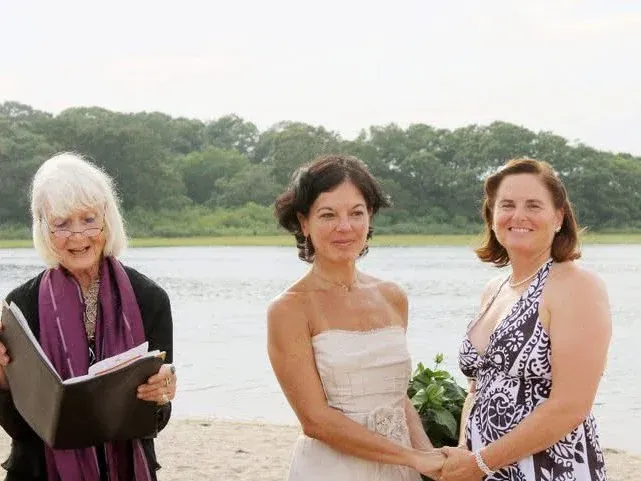
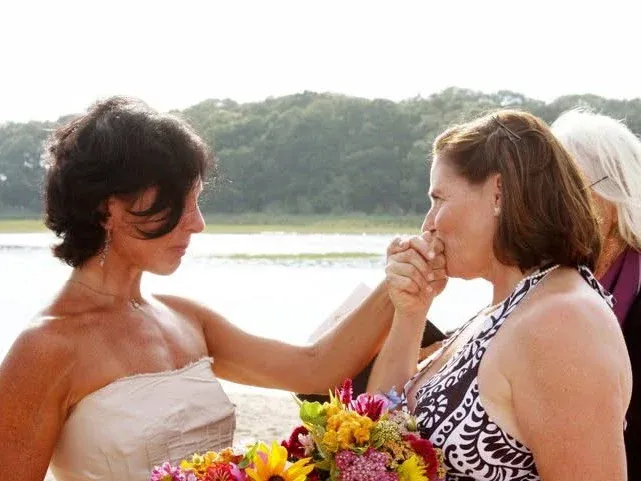
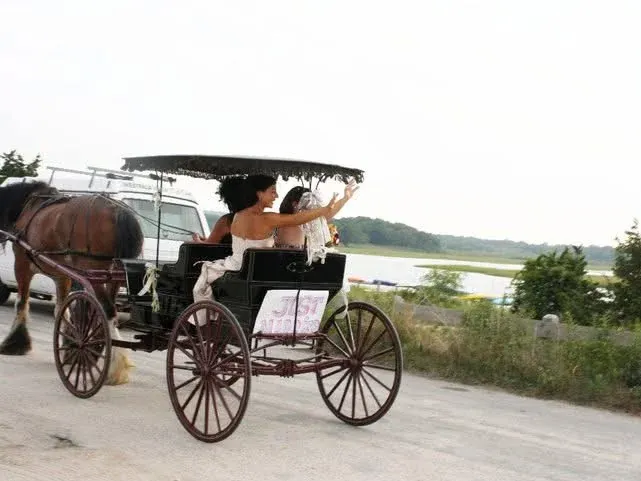
Their conversation held both the difficulty of being visible and the pleasure of living openly.
Something as simple as holding hands
We also talked about affection in public. Holding hands, linking arms, deciding whether a place feels safe enough to be close.
Alejandra described feeling inhibited, watching other couples show affection without appearing to make those calculations. Kathy sometimes felt more comfortable. Her approach, as she explained it, was to assume everyone was gay, just as other people assume everyone is straight.
I loved that reversal. A small adjustment to the default settings.
But underneath the humor was a serious question: how much of yourself do you monitor when you are simply out with the person you love?
Their memories of feeling comfortable differed here, too. That is part of the story. Safety can feel different even to the two people holding hands.
When traveling in Tunisia, they recalled presenting themselves as sisters-in-law because they were cautious about revealing their relationship. They wore wedding rings and invented a family story to explain their closeness. Even in recounting that precaution, they found humor: the story conveniently allowed for a little comforting.
I want that humor to remain in the telling. It is theirs, alongside the calculation that made a cover story feel necessary.
Finding each other, finding community
They remembered the lesbian bars, social groups, and organizing spaces that had helped them find connection. Those places offered friendship, shared purpose, and the possibility of meeting someone who understood without needing the whole explanation.
Moving to the East End changed that experience. They described missing the women’s community they had known, finding some queer spaces centered more on men, and meeting women who were only there for the summer. When the season ended, those friendships became harder to gather around in daily life.
I recognized the question we kept coming back to: where are the women? How do we find each other?
Being more accepted does not automatically mean having somewhere to belong. Their conversation made me think about the value of a place where women can meet, tell their stories, laugh, and recognize something of themselves in one another.
Kathy also spoke about what it takes to keep doing the work. Challenging rejection and discrimination requires endurance, ways to cope, and people or organizations you can turn to when something hurts. She described the work as too important to turn away from, while recognizing that continuing takes support.
I hear that as part of the story of their courage: the relationships that helped sustain it. Making room for those connections is something I want to do through this project.
What they would tell their younger selves
Near the end, I asked what they would say to their younger selves.
Kathy’s answer began simply: “Good job. Good job.” She looked back on what they had done and the courage it had taken. She spoke about the communities they had helped make more accepting, and her belief that most people want to help one another.
Alejandra began with: “Damn, you’re a cute girl.” Of course she did. Then she talked about wishing she had trusted herself sooner and stayed closer to what she knew she wanted.
Their advice to the next generation was to enjoy life, embrace love, and be true to yourself.
After everything we had discussed, I loved that there was room for enjoyment in their answer. They had worked to make more of that life possible.
What parts of myself haven’t I met yet?
As a millennial, I already hear people my age talk as if they’ve missed their chance to begin something new. I recognize that doubt. I dared to start drumming in my late twenties, when plenty of people thought it was a bad idea. Thankfully, I did not build my entire life around that feedback.
Then I look at The Fistys, and I feel that possibility all over again. What else might we discover if we let ourselves begin?
Alejandra brought her poetry, her perspective, and a whole life of things to say into a band. Spoken word became another way to express her world. With amplification. Which I fully support.
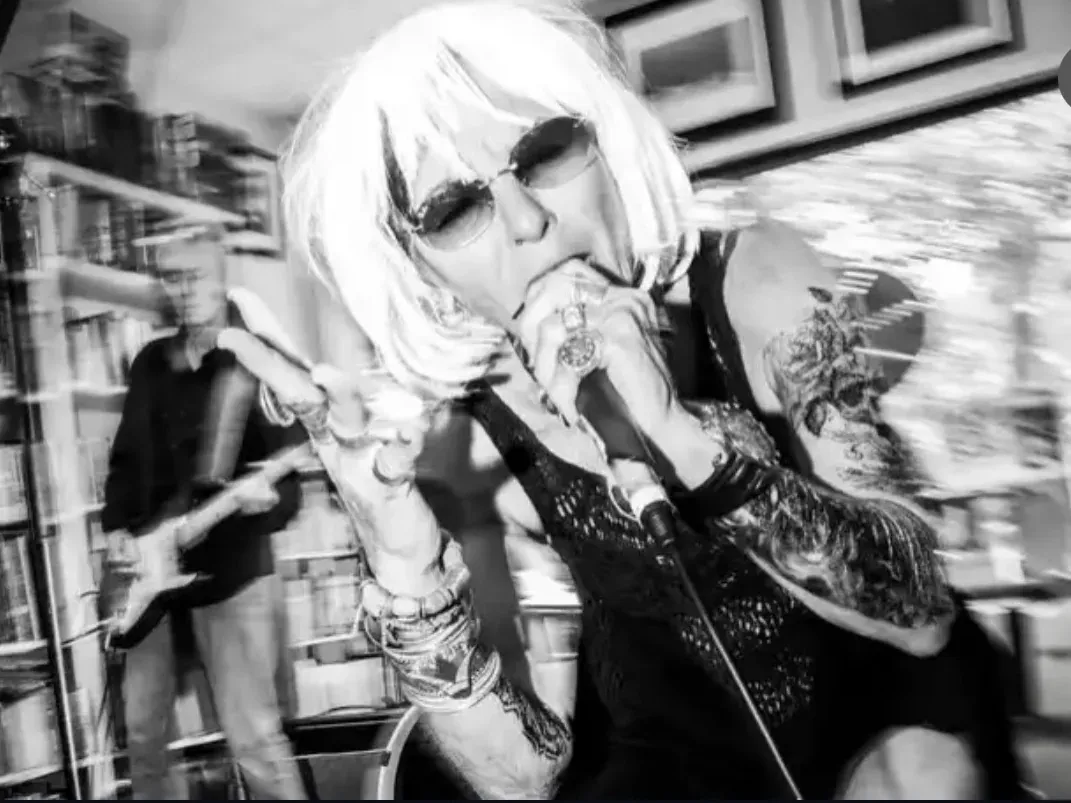
It can be easy to decide that making music belongs to people who began as children, followed a particular path, or already know exactly what they are doing. Her poetry gave her a place to begin. Working with other musicians gave those words another life.
Being part of some of their performances and recording with them has meant a lot to me. I get to contribute rhythm to work made by people whose voices and experiences I value.
The Fistys bring their lives into their music. Their years of teaching, questioning, organizing, and paying attention give them things to say.
I admire Kathy and Alejandra for their music, their humor, and their willingness to keep exploring. They inspire me to ask: what parts of myself haven’t I met yet?
By Mila Tina. Based on conversations with Kathy Henderson and Alejandra Dubove, Mila’s experience performing and recording with them, and the sources below.
Black-and-white photos: Gerson Vargas.
Sources
- The Church: An Evening of Funny Women in Song, August 29, 2024.
- Christopher Walsh, The East Hampton Star: The Fistys: Unapologetically in Your Face, April 24, 2025.
- Christine Sampson, The East Hampton Star: Which “Fantasy Girl Band” Won the Battle?, March 20, 2024.
- Dana Rudolph, Mombian: Phillips Academy GSA: 20 Years of Friendship and Activism, March 16, 2009; originally published in Bay Windows, February 26, 2009.
- Advocates for Youth: Trans-Affirming Schools Project Resource Guide, history timeline, printed page 10.