The Heroine’s Journey
A woman’s quest for wholeness.
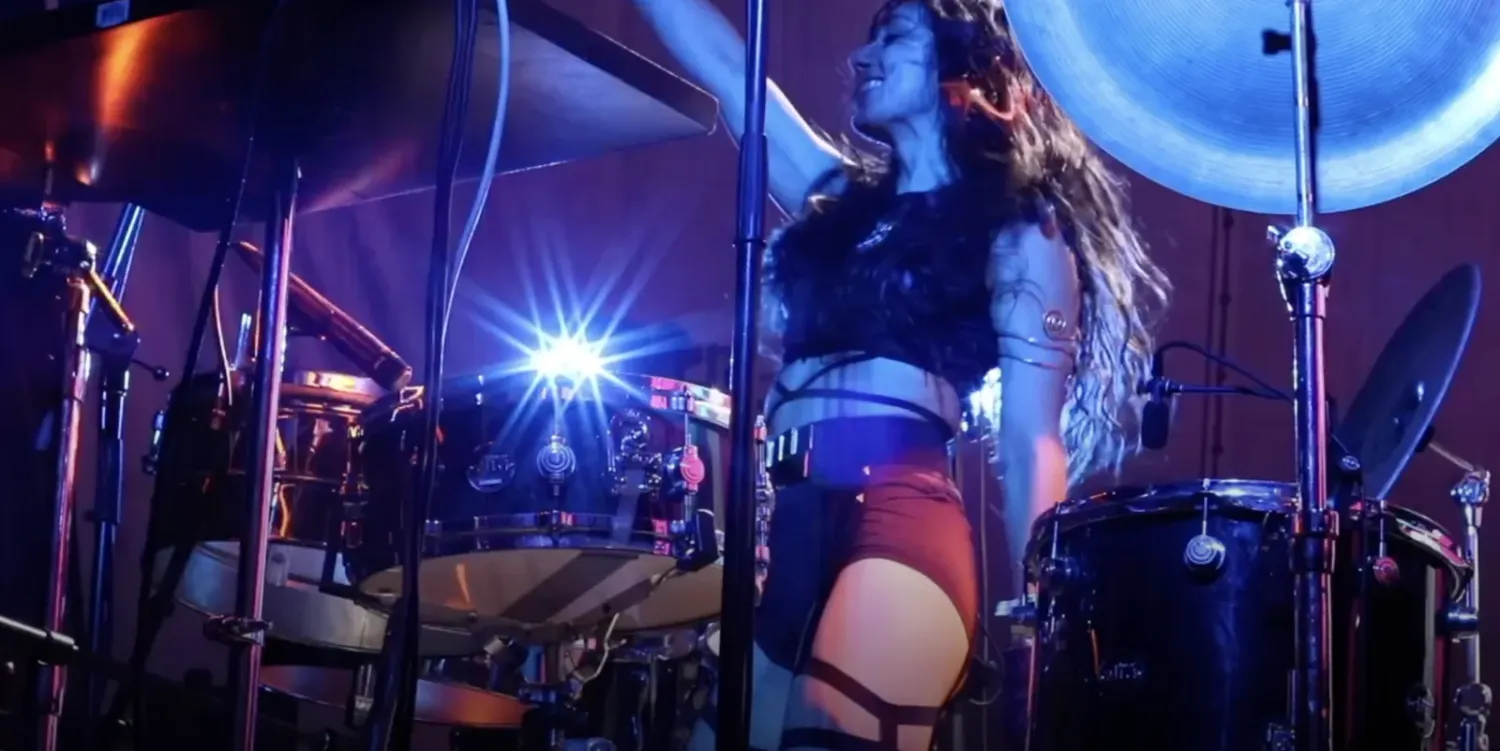
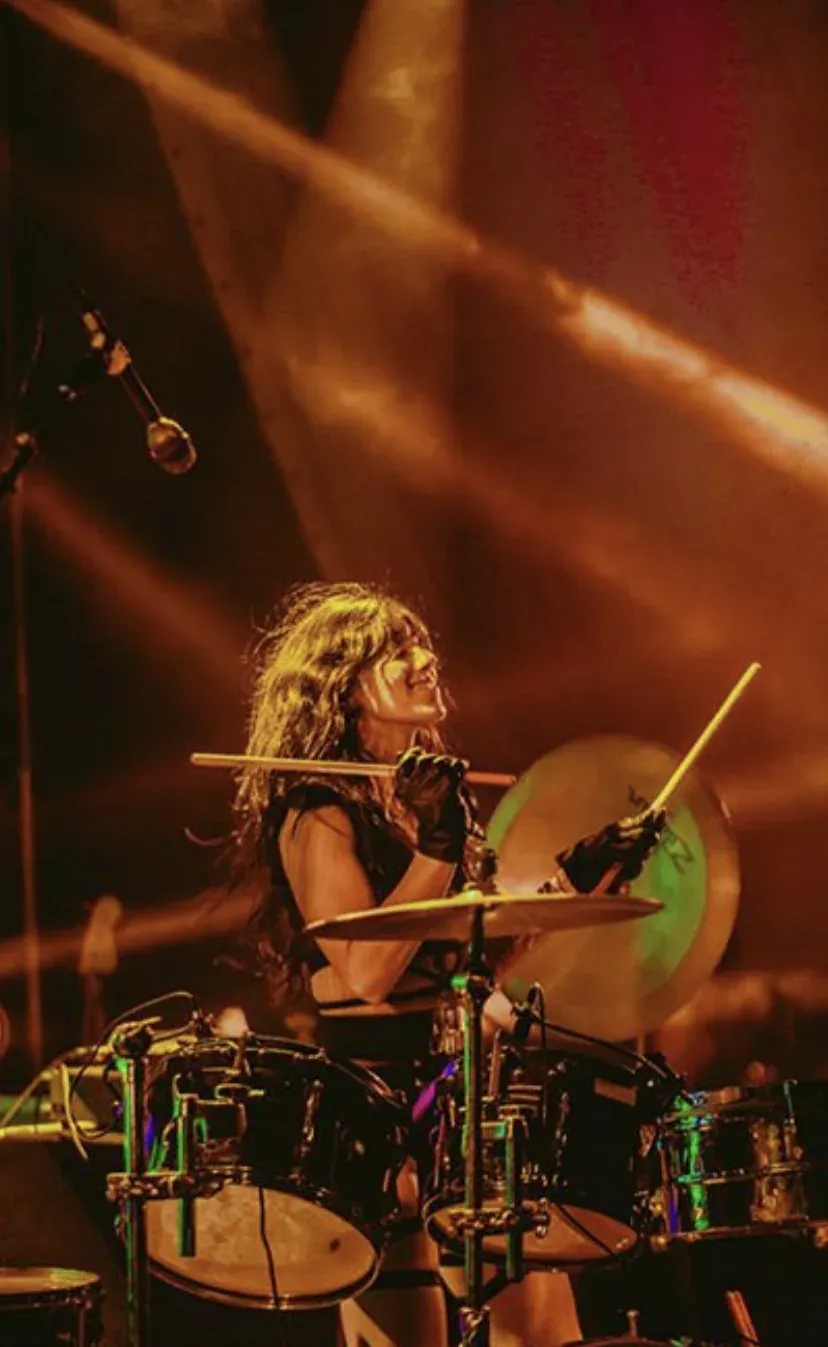
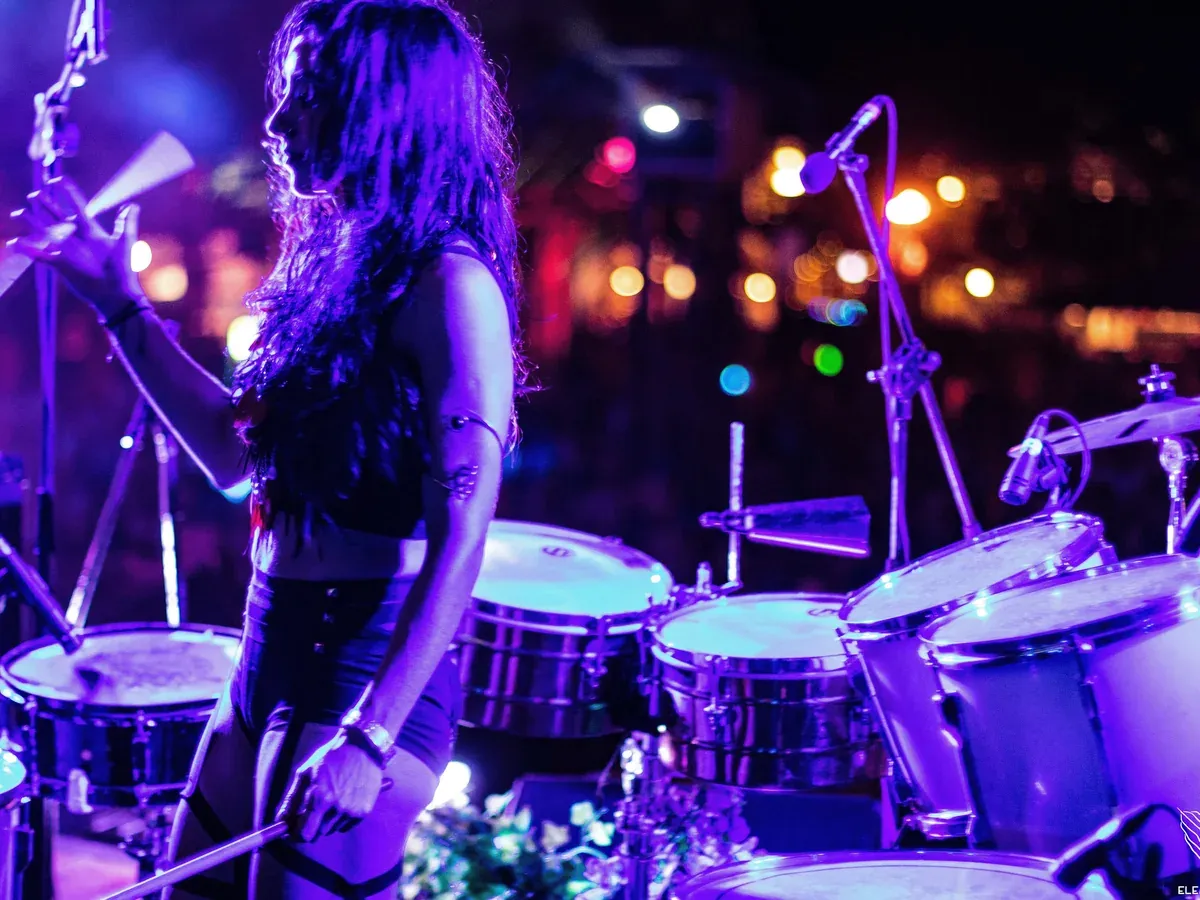
A live solo performance exploring feminine identity, emotional complexity and the freedom to express what often remains unseen. Performing on a standing arrangement she designed, with timbales as the lead voice, Mila Tina brings acoustic and electronic percussion into conversation with dance, martial arts and video. The body that makes the rhythm also tells the story.
Making room for the whole woman.
What happens to the parts of ourselves that have little room to exist within the roles we are expected to inhabit?
The Heroine’s Journey explores this question through feminine experience: the feelings, desires and contradictions that can remain hidden beneath expectations of composure, consistency and availability.
For Mila Tina, becoming her own heroine meant trusting her voice and giving expression to dimensions of herself she was still learning to understand. Tenderness, anger, pleasure, uncertainty and strength could occupy the same body. Each deserved room in the work.
As the performance developed, Maureen Murdock’s The Heroine’s Journey: Woman’s Quest for Wholeness offered a framework for understanding and articulating that exploration. The research gave language to questions already taking shape through music and movement: how inherited expectations shape identity, what we learn to conceal, and what it means to acknowledge more of ourselves.
Wholeness, here, allows contradiction. It leaves room for experiences that do not resolve neatly, and asks how our relationships and environments might make space for them, too.
A small rebellion. A playground.
The standing drum arrangement began as a small rebellion. Playing seated, Mila Tina wanted more room to move, to travel with the rhythm and give emotion a physical form.
She assembled her favorite acoustic and electronic percussion instruments into a configuration of her own, positioning the cymbals so that martial arts gestures could carry through into a strike. The setup became her playground: a space shaped around the possibilities of her body, where a movement could become a sound and a sound could set her in motion.
Dance, percussion and martial arts share a physical vocabulary of timing, weight, precision and release. Within this arrangement, those connections become part of the performance. Lighting and video extend its emotional world beyond the instruments, giving the internal journey a larger space to inhabit.
Making room became a physical act: arranging the instruments around the expression she wanted to explore.
Before it had a name.
The work traces its beginnings to April 2, 2016, when OLA of Eastern Long Island’s Soy María, Soy Mujer at Guild Hall invited Mila Tina to portray women’s stories through live drumming, music composition, video and dance.
The set did not yet have a name. That performance marked the beginning of her work as a solo artist and an exploration she would continue developing across different stages and forms.
“… [Mila Tina] is a drumming powerhouse, using her solo performance to incorporate her unique brand of drumming, vocals, dance and video to tell a story of empowerment for women worldwide…”
The Southampton Press
Guild Hall
OLA of Eastern Long Island’s Soy María, Soy Mujer, East Hampton. The beginning, before the set had a name.
SOB’s
Featured with Rana Santacruz at Locobeach, then opening for Los Amigos Invisibles, New York.
Bay Street Theater
OLA of Eastern Long Island’s Pachanga, Sag Harbor.
Lesbians Who Tech + Allies
Concert with Madame Gandhi and ADAIR, New York.
Envision Festival
Costa Rica, on the Luna and Sol stages.
Patchogue Theatre for the Performing Arts
Hispanic Heritage Celebrations, including a livestream during the pandemic and live performances at the theatre.
Parrish Art Museum
OLA of Eastern Long Island’s 20th birthday Pachanga, Water Mill.
Gold Dust Womxn
Live solo set with drums, percussion and video at Cielos, Ventucopa, California.
Southampton Arts Center
Live performance of original music at the Hamptons Business Expo.
Toward Mujer Luna.
The Heroine’s Journey later evolved into Mujer Luna, extending the exploration through film, a new live performance and original music.
The Moon became a metaphor for feminine complexity: what is visible, what remains hidden, and what continues to exist beyond another person’s view. Its “dark side” offered an image for approaching experiences that are often concealed, misunderstood or given too little room.
The inquiry deepened: how much of the whole woman do we allow ourselves to see?